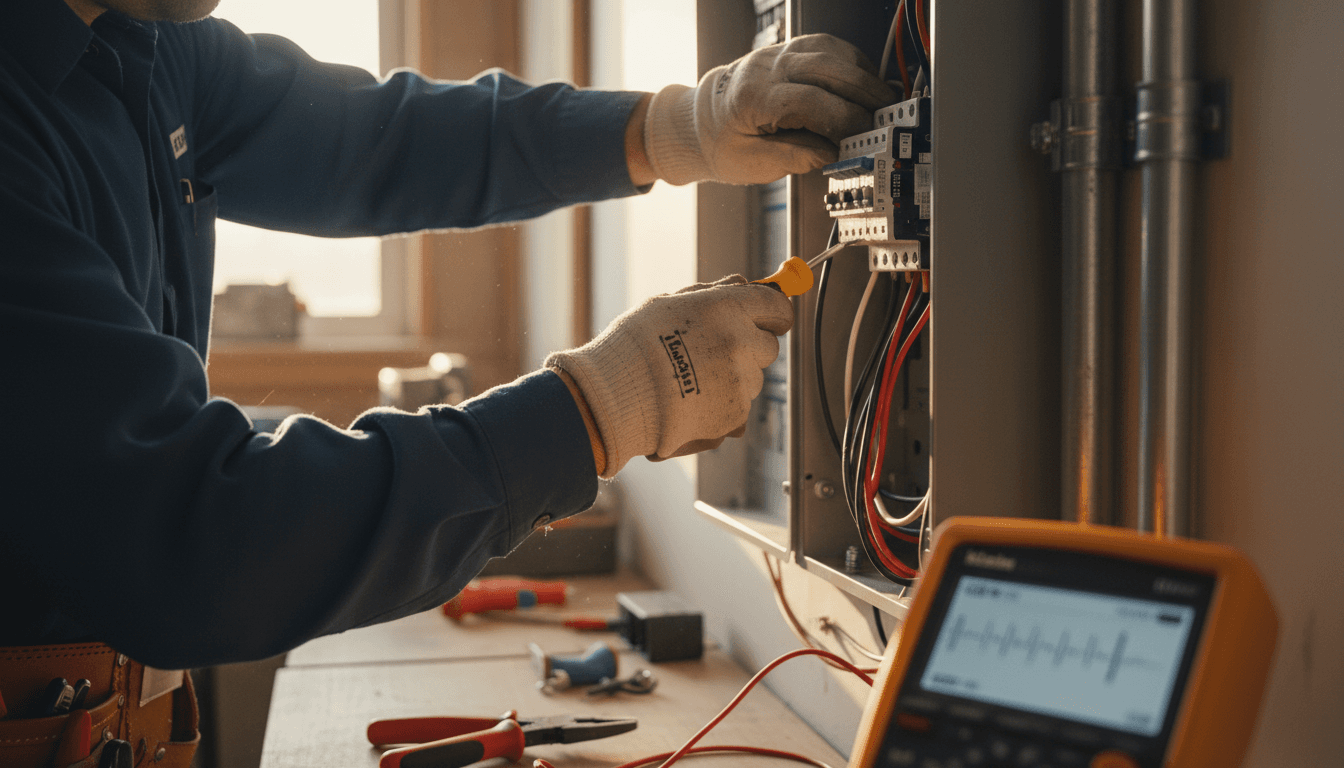
The Complete Guide to an Electrical Panel Upgrade for EV Charger Installation
Electric vehicles (EVs) are rapidly becoming the new standard for modern, eco-conscious transportation. However, transitioning to an electric vehicle involves more than just trading in your gas-powered car; it requires preparing your home to act as your primary fueling station. While plugging your new car into a standard wall outlet is technically possible, it is far from efficient. To achieve the fast, reliable charging times that EV drivers expect, a dedicated Level 2 home charging station is a necessity.
This necessity brings us to the core issue: older homes are rarely equipped to handle the immense electrical demand of modern EV charging. If your home’s electrical infrastructure is outdated, you will likely need an electrical panel upgrade for EV charger installation. Understanding the ev charger installation requirements and evaluating your home’s electrical capacity is the critical first step in your ev home charging station setup.
Signs You Need an Electrical Panel Upgrade for Your EV Charger
A common question homeowners ask is: do I need a panel upgrade for an EV? To answer this, you must first understand the power demands of different charging levels.
- Level 1 Chargers: These plug into a standard 120-volt household outlet. They deliver about 3 to 5 miles of range per hour. While they require no special equipment, they are incredibly slow and often insufficient for daily commuting needs.
- Level 2 Chargers: These require a dedicated 240-volt circuit, similar to what an electric oven or dryer uses. They deliver 25 to 30+ miles of range per hour, ensuring your vehicle is fully charged overnight.
Because Level 2 chargers draw a massive, continuous electrical load for several hours, they push many existing electrical panels to their absolute limits. To determine if you need an electrical panel upgrade for EV charger compatibility, look out for these clear warning signs:
- Frequent Breaker Trips: If running the microwave, air conditioner, and television simultaneously causes your breakers to trip, adding a 40-amp EV charger will inevitably overwhelm the system.
- Flickering or Dimming Lights: This is a classic symptom of an electrical panel struggling to distribute power efficiently.
- An Outdated Fuse Box: If your home still relies on an old screw-in fuse box rather than modern circuit breakers, it is entirely unequipped for an EV. You will need an immediate panel replacement.
- A Full Panel: Even if your panel is relatively modern, if there are no empty slots left for a new double-pole breaker, a electrical panel upgrade for EV charger installation is required to create room for the new circuit.
Key Requirements for Upgrading Your Electrical Panel
Meeting the level 2 ev charger electrical requirements is primarily about ensuring your home has enough "spare capacity." When an electrician evaluates your home, they will perform a load calculation. This calculation determines the maximum amount of power your home currently uses and compares it to the total capacity of your electrical service.
Most Level 2 chargers require a dedicated 40-amp or 50-amp circuit. To safely support this alongside your existing HVAC system, refrigerator, lighting, and appliances, your home generally needs a minimum of 100-amp service. However, the gold standard for modern homes, and a near-requirement for future-proofing, is a 200-amp service.
An electrical panel upgrade for EV charger installation isn’t just about swapping out the main breaker box. The process must also adhere to strict National Electrical Code (NEC) Article 625 standards for EV charging equipment. Key requirements include:
- A dedicated, individual branch circuit for the EV charger.
- Arc-fault circuit interrupter (AFCI) or ground-fault circuit interrupter (GFCI) protection, depending on local codes.
- Properly sized wiring to handle the continuous, heavy electrical load without overheating.
The Costs of an Electrical Panel Upgrade for an EV Charger
Budgeting for your EV infrastructure is crucial. The cost to upgrade electrical panel for EV charger projects can vary wildly depending on your location, the condition of your current electrical system, and the size of the panel you choose.
If you are upgrading an existing 100-amp panel to a modern 100-amp panel just to free up breaker space, your costs will be on the lower end. However, most homeowners looking to support an EV will need to upgrade their entire electrical service.
Here is a general breakdown of what you can expect:
- Upgrading to a 100-amp panel: Typically ranges from $1,200 to $2,500, including parts and labor.
- The 200 amp service upgrade cost: Upgrading to a 200-amp service, which provides ample power for an EV, modern appliances, and future home additions, generally ranges from $2,000 to $4,000 or more.
The final electrical panel upgrade for EV charger cost will depend heavily on whether your utility company needs to upgrade the overhead or underground service drop, if your meter base needs to be relocated, or if extensive drywall removal and rewiring are required to connect the new panel. Keep in mind that while this is a significant upfront investment, a modernized electrical panel dramatically increases your home's resale value and ensures the safety of your family.
Step-by-Step Timeline: What to Expect During the Upgrade
Understanding the electrical panel replacement timeline can help alleviate the stress of undergoing major electrical work. While every home is different, a standard electrical panel upgrade for EV charger installation follows a predictable schedule.
Step 1: Initial Assessment and Quote (Days 1 to 3)
A certified electrician will visit your home to inspect your current panel, perform an electrical load calculation, and verify the level 2 ev charger electrical requirements for your specific vehicle. They will provide a detailed quote and outline the scope of work.
Step 2: Permitting and Utility Coordination (Weeks 1 to 3)
Before any physical work begins, your electrician must pull the necessary permits from your local municipality. If you are upgrading to a 200-amp service, the electrician will also need to coordinate with your local utility company to schedule a temporary power disconnect and the installation of a larger service drop.
Step 3: Installation Day (4 to 8 Hours)
This is the day the physical work happens. The utility company will shut off power to your home. The electrician will safely remove your old panel, install the new higher-capacity panel, run the dedicated 240-volt wiring to your EV charger location, and securely connect everything to the grid.
Step 4: Municipal Inspection (Days 1 to 5 Post-Install)
After the physical installation is complete, a local municipal inspector must visit your home to verify that the work meets all local building and safety codes. Once the inspection is passed, the utility company will permanently restore power, and your EV charger can be activated.
Permits, Codes, and Hiring a Qualified Electrician
When dealing with high-voltage electricity, safety is critical. Electricity is unforgiving, and attempting a DIY panel upgrade is incredibly dangerous and almost always violates local laws. It is absolutely essential to hire a licensed electrician for EV charger installations and panel upgrades.
Pulling the proper permits is not just a bureaucratic hurdle; it is a critical legal protection. If you bypass the permitting process for your electrical panel upgrade for EV charger project, you run several severe risks:
- Insurance Voids: If an electrical fire occurs and it is discovered that unpermitted work was done on your panel, your homeowner's insurance company can legally refuse to pay out your claim.
- Failed Home Sales: When you eventually sell your home, buyers will request an inspection. Unpermitted electrical work will be flagged, forcing you to pay for corrective work or legal penalties before the sale can close.
- Safety Hazards: A licensed electrician understands the nuances of local building codes, proper grounding techniques, and load balancing. They ensure your electrical panel upgrade for EV charger integration is entirely fire-safe and reliable.
Conclusion: Enjoying Fast and Safe EV Charging at Home
Making the switch to an electric vehicle is an incredible step toward a sustainable future and a highly cost-effective mode of transportation. However, ensuring your home is ready to safely bear the electrical load is the most vital part of the transition.
While the prospect of paying for an electrical panel upgrade for EV charger installation and navigating the permitting process might seem daunting, it is a necessary investment in your property and your peace of mind. By recognizing the warning signs of an aging panel, understanding the level 2 ev charger electrical requirements, and partnering with a trusted, licensed electrician, you can future-proof your home. Ultimately, completing your electrical panel upgrade for EV charger project guarantees that you will enjoy fast, efficient, and completely safe EV charging in the comfort of your own driveway for years to come.
Related Reading
Before the panel work starts, a structured EV charger job management workflow keeps the load calc, permit, and upgrade quote connected.