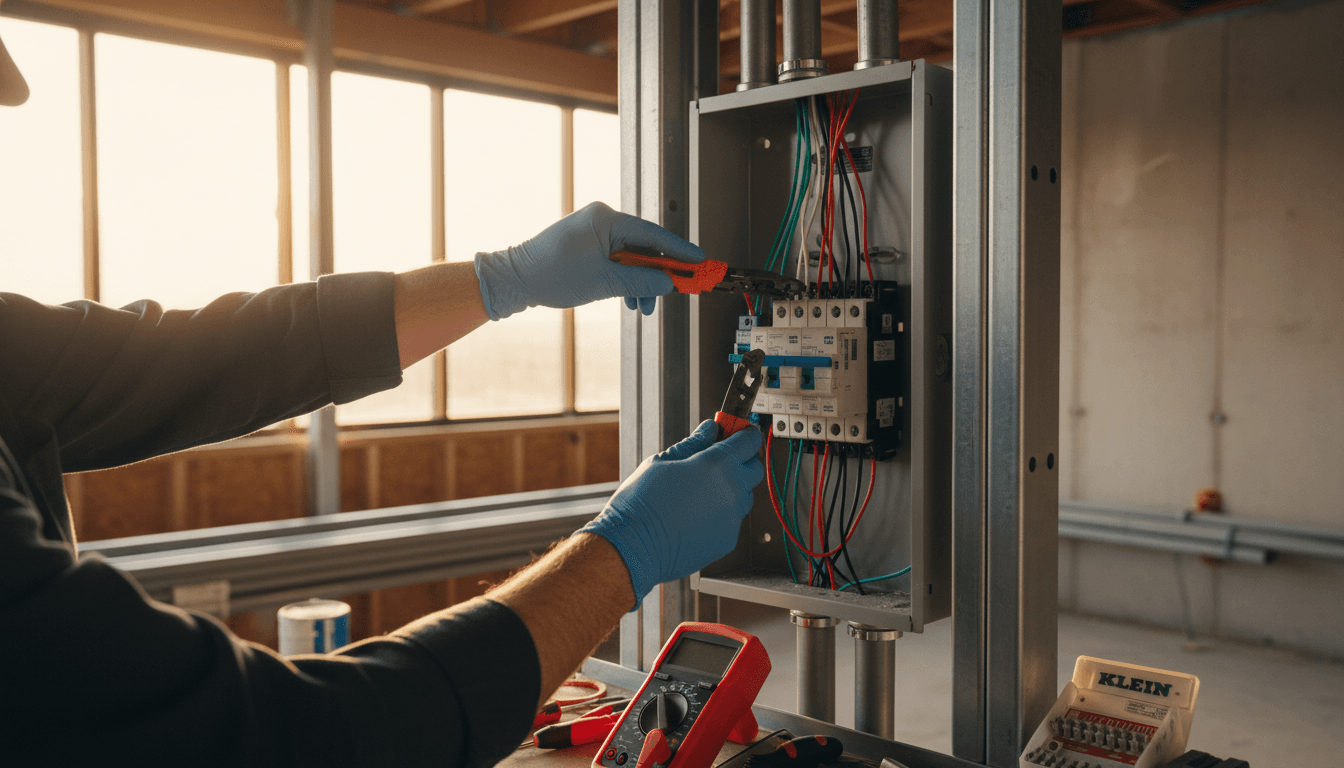
The Complete Guide to Electrical Panel Upgrade Permit Requirements
Upgrading your home’s electrical panel is one of the most impactful improvements you can make. Whether you are adding a new EV charger in the garage, installing a hot tub, or simply bringing an aging 100-amp system up to modern standards, a panel upgrade ensures your home can safely handle today's power demands. However, before you or your contractor touch a single wire, you must navigate the legal landscape.
Understanding electrical panel upgrade permit requirements is the most critical step in this process. Navigating these regulations ensures that your high-voltage project is legal, safe, and fully recognized by your local municipality. In this comprehensive guide, we will break down everything you need to know about securing the right approvals, passing your inspections, and avoiding the disastrous pitfalls of unpermitted electrical work.
1. Introduction: Why Electrical Panel Upgrades Require Permits
It is a common question among eager homeowners: do you need a permit to replace an electrical panel? The short answer is a resounding yes. Almost all local jurisdictions legally require a permit for electrical panel upgrades.
But why is this step mandatory? Your home’s electrical panel is the central nervous system of your property's power supply. It distributes high-voltage electricity from the utility grid throughout your home, protecting your family from electrical fires, electrocution, and power surges. Because the stakes are so high, local governments mandate strict adherence to the National Electrical Code panel requirements (commonly known as the NEC).
The NEC is updated every three years to reflect the latest safety science. When you pull a permit, you are legally binding yourself to install equipment that meets these rigorous, life-saving standards. Failing to meet electrical panel upgrade permit requirements is not just a bureaucratic slap on the wrist; it is a severe safety hazard that compromises the integrity of your home's electrical grid.
2. The Risks of Skipping the Permit Process
In an effort to save time or bypass a small fee, some homeowners and unscrupulous contractors consider skipping the permitting process. This is a massive, and potentially expensive, mistake. Failing to adhere to electrical panel upgrade permit requirements opens you up to a cascade of financial and legal liabilities.
Hefty Fines and Legal Penalties
If a code enforcement officer discovers you are doing major electrical work without a permit, work will be halted immediately. The penalty for no electrical permit can range from hundreds to thousands of dollars, depending on your local municipality. In some cases, the city may force you to remove the drywall covering the new panel entirely so a proper inspection can take place.
Voided Homeowners Insurance
Your homeowners insurance policy is a binding contract that assumes your home meets local safety codes. If an unpermitted electrical panel causes a house fire, your insurance company will almost certainly launch an investigation. When they discover the lack of a permit, they can legally deny your claim and void your policy entirely, leaving you to pay for structural rebuilding out of pocket.
Major Obstacles When Selling Your House
Real estate transactions require full disclosure. When you sell your home, buyers will hire a home inspector who will quickly spot a newer electrical panel. If there is no record of a permit or a final "green tag" (approval) from the city, you will face immense hurdles. Buyers will demand that you retroactively pull a permit, which means opening up walls and paying fines, or they will walk away from the deal entirely.
By adhering to electrical panel upgrade permit requirements, you protect your financial investment and ensure your property remains highly marketable.
3. General Permit Requirements for Panel Upgrades
While the exact electrical panel upgrade permit requirements vary depending on where you live, the foundational rules remain largely consistent across the United States.
First and foremost, the scope of your project will dictate the paperwork. If you are upgrading from a 100-amp to a 200-amp service, the scale of the project is much larger. A 200 amp service upgrade permit typically requires a detailed load calculation to prove that your incoming service can handle the new electrical demand, as well as upgraded wiring from the utility pole and a new meter base.
Secondly, the electrical permit cost is usually determined by the total valuation of the project or the amperage of the new panel. On average, you can expect to pay anywhere from $50 to $300 for the permit alone.
Finally, standard electrical panel upgrade permit requirements mandate that the physical panel and all associated breakers be listed and approved by a recognized testing laboratory, such as Underwriters Laboratories (UL). Using off-brand or unlisted equipment is one of the most common reasons inspectors fail an installation. To avoid uncovering hidden electrical panel replacement code violations down the line, you must ensure all equipment meets baseline NEC standards before the work begins.
4. State-by-State Guide to Electrical Panel Permits
It is crucial to understand that there is no single, federal standard for permitting electrical work. Instead, electrical panel upgrade permit requirements are dictated at the state, county, and city levels.
For instance, states like Illinois and Texas leave permitting almost entirely up to local municipalities, meaning rules can drastically differ between neighboring towns. In contrast, states like California and Oregon have strict, statewide building codes that govern electrical work uniformly across all jurisdictions. California contractors can compare tooling for their market in our California electrical contractor software guide.
Homeowner Electrical Permit Rules: DIY vs. Licensed Electrician
One of the most important things you must verify is your local homeowner electrical permit rules.
In many states and counties, a homeowner who physically occupies the property is legally allowed to pull their own electrical permit to perform work on their primary residence. However, there are strict caveats:
- You must reside in the home; rental properties almost universally require a licensed electrician.
- You may be required to pass a basic electrical competency exam at the building department.
- The work must be entirely performed by the homeowner; you cannot hire a "handyman" to do the work under your permit.
Because electrical panel upgrade permit requirements differ so significantly by region, you must contact your local building, zoning, or codes department to confirm whether you are legally allowed to perform a DIY panel replacement, or if a state-licensed Master Electrician must pull the permit on your behalf.
5. How to Pull an Electrical Permit for a Panel Upgrade
If you are ready to proceed, understanding how to pull an electrical permit is your next step. The process is generally straightforward but requires careful preparation.
Step 1: Gather Project Details Before contacting the building department, gather your panel's make, model, and amperage. You will also need a line diagram showing where the panel is located in relation to the meter base and the utility connection.
Step 2: Submit the Application Many municipalities now allow you to submit permit applications online via a citizen access portal. If your town isn't digitized yet, you will need to visit the building department in person. If you are hiring a contractor, they will handle this step and build the permit fee into your total project quote.
Step 3: Wait for Utility Approval For major service upgrades (like moving from 100 to 200 amps), the building department may require coordination with your local utility company. The utility must confirm that the grid and transformer in your neighborhood can handle the increased electrical load.
Step 4: Pay the Fees Once the application is approved, you will pay the required fees.
Meeting these electrical panel upgrade permit requirements officially logs your project in the city’s database. Once the permit is issued, you will receive a physical permit card that must be displayed prominently on the job site (often taped to a window or front door) until the project is completed.
6. The Final Inspection Process: What Homeowners Need to Know
Pulling the permit is only half the battle. Fulfilling your electrical panel upgrade permit requirements culminates in a final inspection by a local code enforcement officer.
A post-installation inspection by a local code official is universally required to close the permit and certify the panel's safety. You or your electrician will call in a "final inspection" to the city, and an inspector will arrive at your property to review the work.
The Residential Electrical Inspection Checklist
While inspectors use their own internal guidelines, they generally follow a standard residential electrical inspection checklist to ensure compliance. The inspector will check for:
- Proper Clearances: The NEC requires a minimum of 36 inches of clearance in front of the panel and 30 inches of width.
- Secure Mounting and Bonding: The panel must be securely fastened to the wall, and the electrical system must be properly grounded and bonded to prevent shock hazards.
- Correct Wire Sizing: The incoming service entry conductors must match the amperage of the main breaker (e.g., 200-amp service requires specific gauge wiring).
- Dedicated Circuits and Breakers: The inspector will verify that AFCI (Arc-Fault Circuit Interrupter) and GFCI (Ground-Fault Circuit Interrupter) breakers are installed where required by modern code, even if the old panel didn't have them.
- Tight and Tidy Wiring: Wires inside the panel must be neatly routed, stripped properly, and securely torqued to the bus bars.
If the installation passes, the inspector will sign off on the permit card, providing you with legal proof that your upgrade is safe and compliant. If the inspector discovers electrical panel replacement code violations, they will issue a correction notice. You will have a set timeframe to fix the issues and schedule a re-inspection. Ensuring all electrical panel upgrade permit requirements are satisfied during this phase is the ultimate key to a successful project.
7. Conclusion: Ensuring a Safe and Compliant Upgrade
Upgrading an electrical panel is a complex, high-stakes project that should never be treated as a casual weekend DIY endeavor. The safety of your family, the longevity of your home, and the validity of your homeowners insurance rely heavily on the proper execution of this work.
Taking the time to understand and fulfill your local electrical panel upgrade permit requirements is not just about following the law, it is about peace of mind. By securing the right permits, adhering to NEC standards, and passing your final inspection, you guarantee that your home is powered by a system that is as safe as it is durable.
Whether you are planning a massive 200 amp service upgrade permit or simply replacing an outdated fuse box, remember that skipping steps is never worth the risk. Contact your local building department today, review the necessary regulations, and take the proper, legal steps to power your home for the future.