

1099 Tracking for Electrical Contractors: A Practical 2026 Guide
1099 tracking for electrical contractors means keeping a complete, year-round file for every subcontractor you pay: legal name, EIN or SSN, a signed W-9, payment dates, amounts, and the job where the work happened. If you paid an unincorporated sub $2,000 or more in 2026, the IRS generally requires a 1099-NEC; the reporting threshold rose from $600 to $2,000 for payments made in 2026. AceWatt keeps the job, invoice, and expense records organized in one CRM so year-end is a review, not a reconstruction.
Why 1099 Tracking for Electrical Contractors Matters in 2026
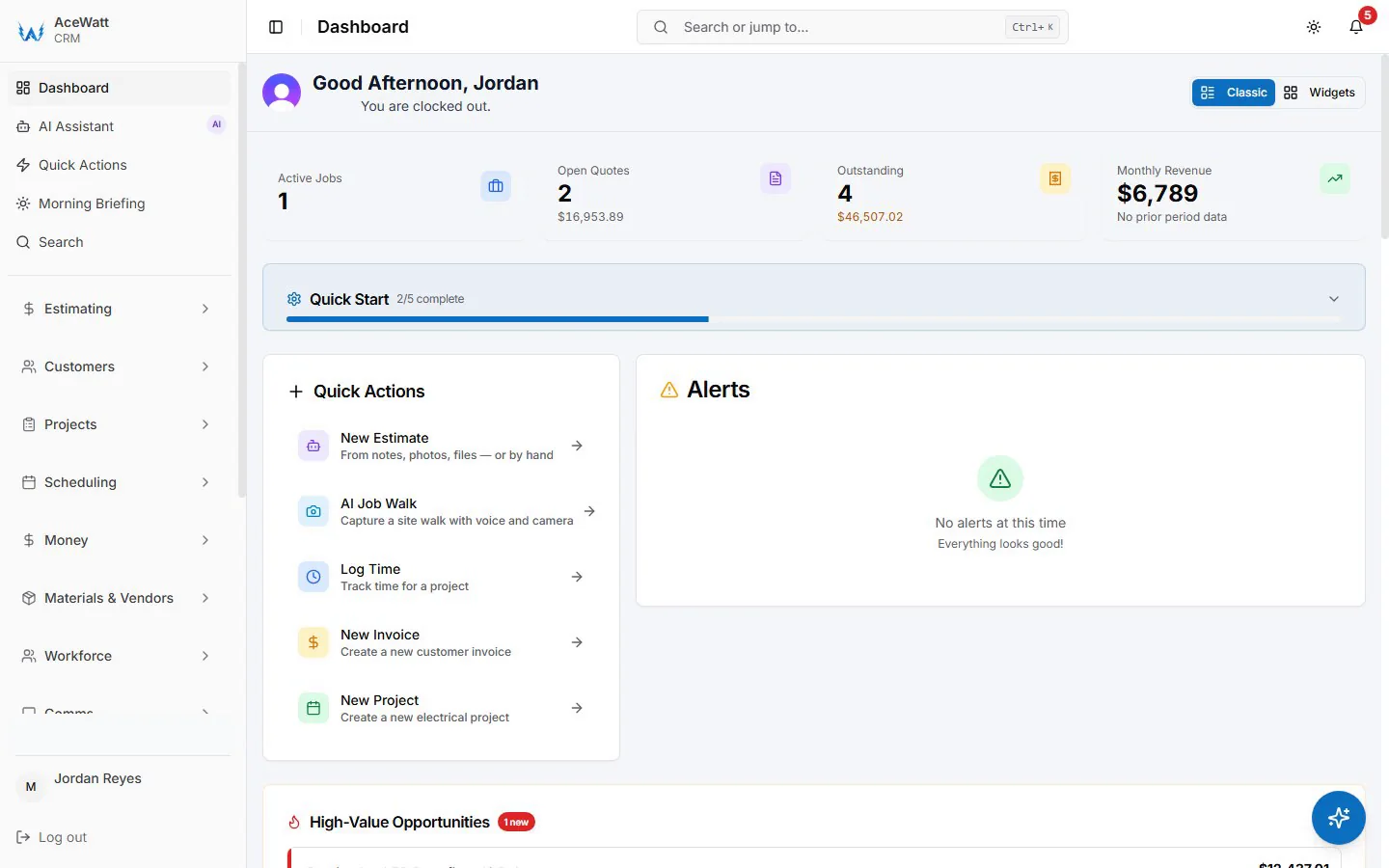
Most electrical shops treat subcontractor paperwork as a January problem. Then January arrives, the accountant asks for W-9s and payment histories for the two journeyman helpers and the low-voltage sub you used in March, and you spend a week digging through texts, payment app receipts, and email attachments.
The stakes are real. For returns filed in 2027, failing to file a required 1099-NEC costs $60 per form if corrected within 30 days of the deadline, $130 per form through August 1, and $340 per form after that, and intentional disregard can cost the greater of $690 per form or 10% of the amount required to be reported, with no cap, according to the IRS information return penalties page. On top of that, if you cannot show a W-9, you may be required to back withhold 24% from payments to that subcontractor under IRS backup withholding rules.
The fix is not a bigger shoebox. It is capturing the right data at the right moments: when you onboard the sub, when you dispatch them, when you pay them, and when you close the job. A CRM built for electrical work holds those records where the work actually happens.
What Counts as IRS-Ready Subcontractor Tracking
For each subcontractor, your 2026 file should include:
- Legal business name exactly as it appears on the W-9
- EIN or SSN from the W-9, not from a text message
- Entity type: sole proprietor, LLC, partnership, or corporation
- Mailing address for form delivery
- Each payment date and amount
- The job or project where the work was performed
- Whether payments were made by cash, check, card, or ACH
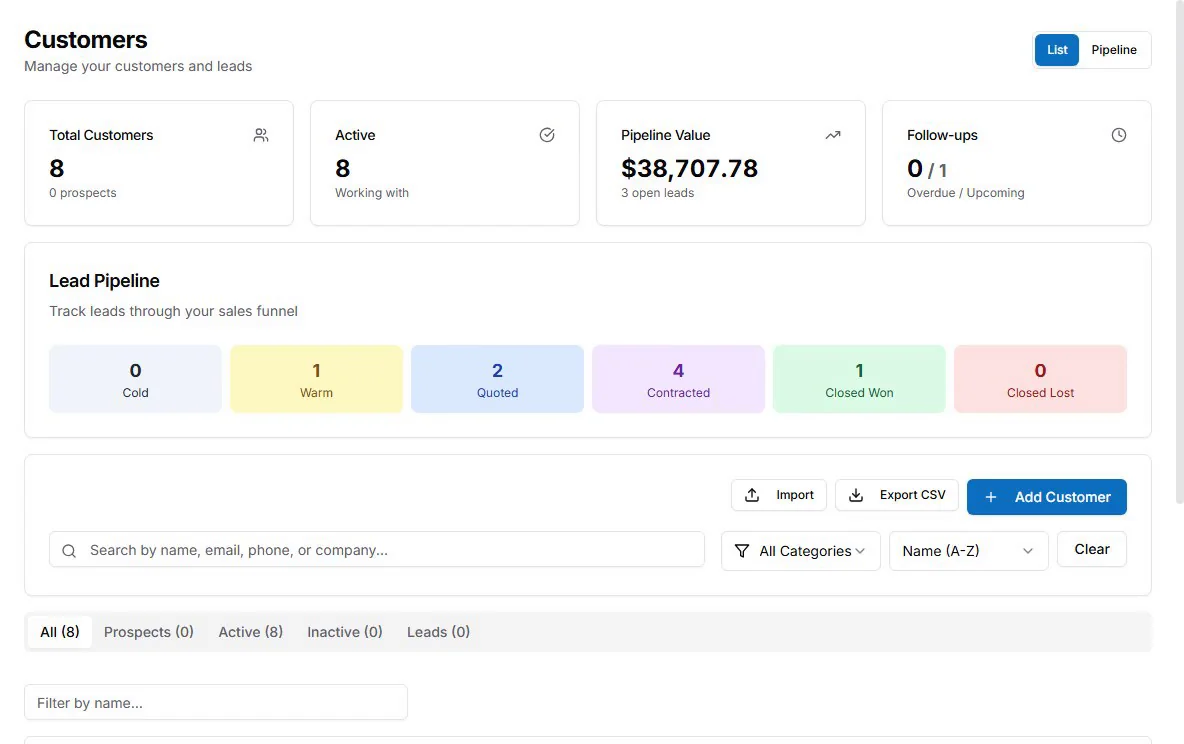
The $2,000 threshold applies to aggregate payments to a single sub during the calendar year, not per job. Four payments of $600 each to the same lighting installer still cross the line. Payments by credit card or third-party networks like PayPal are reported by the processor on a 1099-K instead, so you generally exclude them from both your own 1099-NEC and the threshold total. Verify the details with your accountant and the IRS 1099-NEC instructions at IRS.gov.
One classification note that matters more than any form: calling someone a subcontractor does not make them one. The IRS applies behavioral control, financial control, and relationship tests. If you set the sub's hours, supply all the tools, and pay them hourly, a tax professional may tell you they are an employee. Get that opinion before year-end, because misclassification penalties and back payroll taxes dwarf the late-filing penalties.
Collect W-9s and Payment Details Before the First Check Goes Out
The easiest system is the one that runs before money moves. Before you dispatch a new sub, require:
- A completed and signed W-9. Use the current revision from IRS Form W-9. Note the checkbox on line 3 for LLC tax classification.
- A certificate of insurance with your company named as certificate holder, and license details where your state requires them. Our posts on insurance tracking for electrical contractors and certification tracking software cover the workflow in detail.
- A payment method on file, with a stated pay terms schedule such as net 15 after invoice.
Keep the W-9 and COI in a single controlled folder per subcontractor in your document system, matched to the exact name you pay, instead of scattered across email threads. AceWatt does not store the certificate documents themselves; each subcontractor record carries an insurance-expiry date so you can see whose COI is current, while the files stay where your office controls access.
Connect Subcontractor Work to Jobs, Invoices, and Expenses in AceWatt
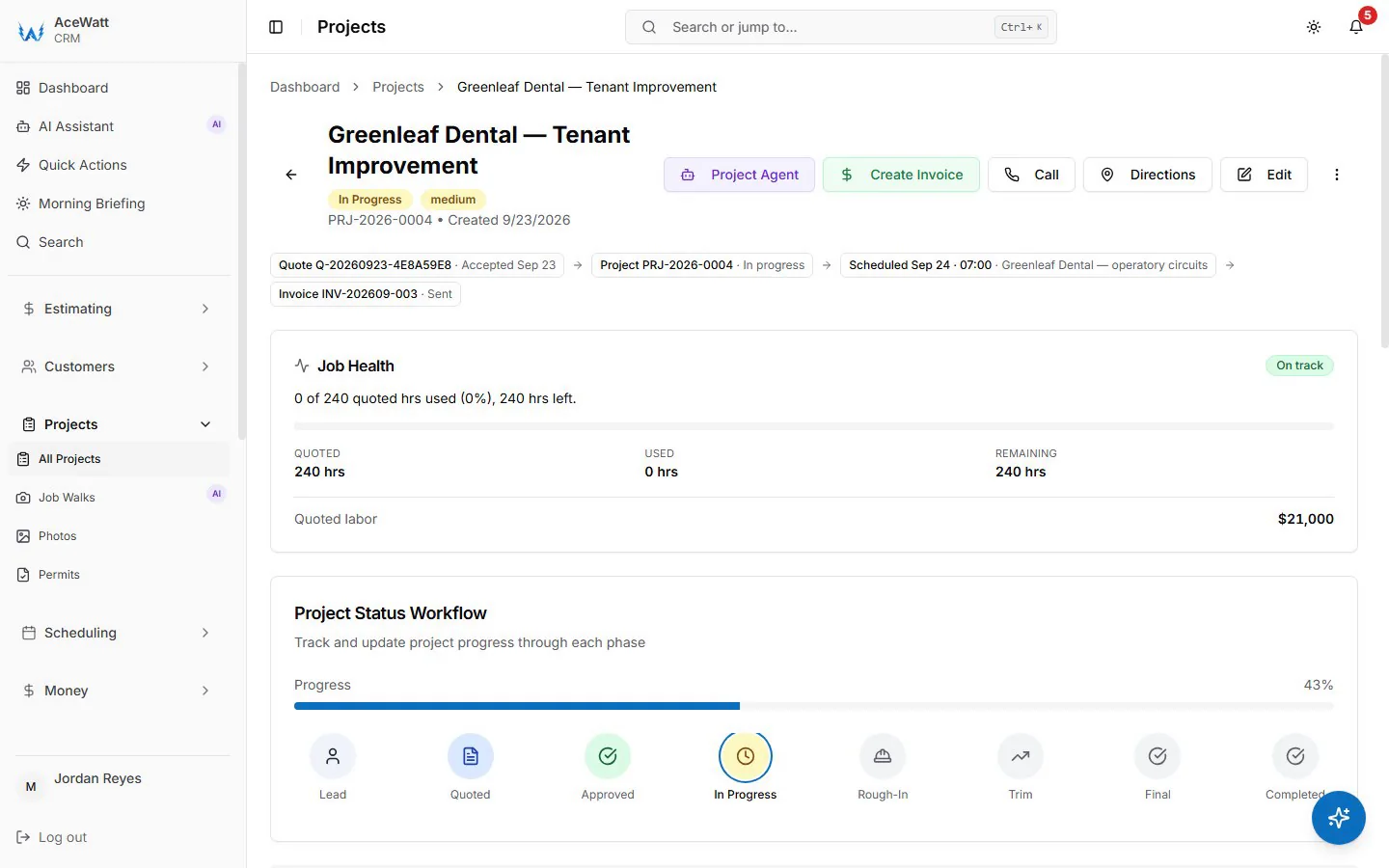
Subcontractor costs are job costs, and job costs belong to the job record. In AceWatt, the pattern looks like this:
- The job entry for a panel upgrade or commercial tenant build-out carries the quotes, invoices, schedule, and notes for that project.
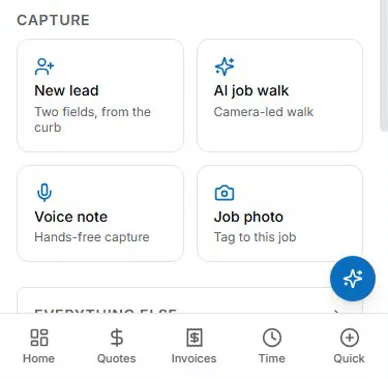
- Sub expenses get logged against the project, including from the field. The AceWatt app queues expenses captured without signal and sends them when the connection returns, so a sub's invoice photographed in a basement does not disappear.
- Project notes and AI Job Walk reports document what work the sub actually performed on site, which resolves disputes about scope when a sub's invoice does not match the work.
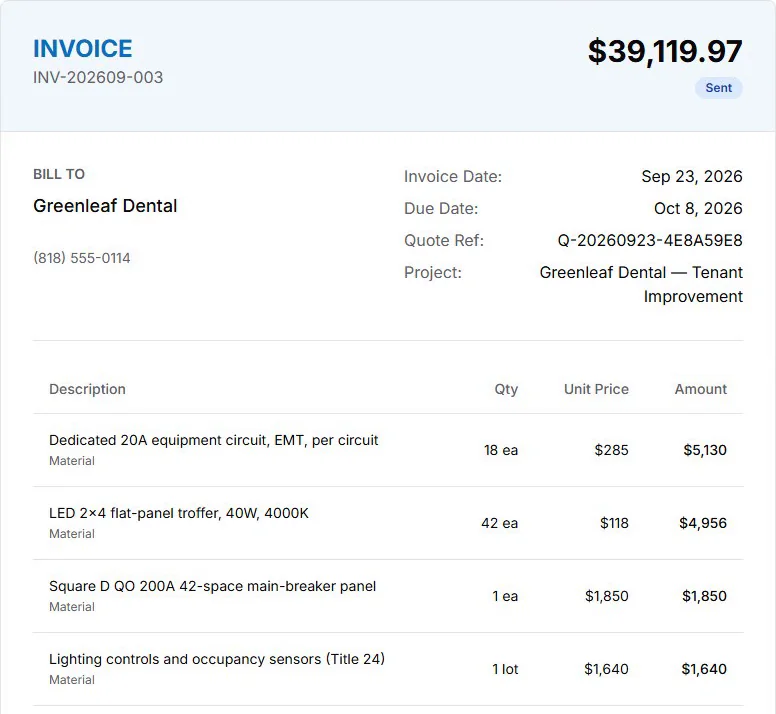
- AceWatt's financial pipeline runs quote to job to invoice to paid, keeping your customer receivables clearly separate from what you owe subs. The invoice aging report (0 to 30 days through 120+ days) shows which receivables are funding your sub payments.
That separation matters for cash flow. If you paid a sub $4,800 for a meter main swap in June but the customer invoice is still unpaid in September, the aging report surfaces it before it becomes a payroll problem. For more on that cycle, see how electrical contractors use AceWatt to get paid faster.
For your own crew, AceWatt records clock-in and clock-out from the phone with location, and flags whether the tech was at the job site. That time record is strong evidence in a classification review, and our time tracking guide for electrical contractors covers how it fits payroll prep. It tracks W-2-style hours, not 1099 status; classification is a determination you make with a professional. And if those hours land on federally funded public work, the same weekly record becomes the backbone of prevailing wage certified payroll.
Use QuickBooks-Ready Exports to Prepare Year-End Accountant Files
AceWatt Growth and Scale plans include QuickBooks-ready exports: an invoice-list spreadsheet and a payroll-hours CSV in QuickBooks layout. Full QuickBooks sync is in development, but today the workflow is export and import, and it works.
Your year-end accountant package then contains:
- The invoice export, covering customer billing for the year
- The payroll-hours CSV for your employees
- Your sub expense entries, pulled from project records by job and date
- The W-9s and COIs from your controlled subcontractor folder in your document system
Handing your accountant a job-coded file cuts their prep hours, which cuts your bill. It also makes the 1099-NEC preparation mechanical: filter payments by subcontractor, total them, confirm the $2,000 threshold, and file. Forms for 2026 payments are due to both recipients and the IRS by February 1, 2027: the standard January 31 deadline falls on a Sunday, so it moves to the next business day. Confirm current deadlines at IRS.gov before filing.
AceWatt is operational software, not tax filing software. It keeps the records straight so your accountant can file correctly.
Common 1099 Mistakes Electrical Shops Need to Avoid
- Paying before the W-9 arrives. If the sub never sends one and you have no tax ID, backup withholding at 24% may be required.
- Using the sub's DBA name on the 1099 instead of the legal name on line 1 of the W-9. Name and TIN mismatches trigger IRS notices.
- Totaling payments per job instead of per contractor per year. The threshold is annual and aggregated.
- Forgetting a sub who worked on one job in the spring. Job-coded expense records catch this; memory does not.
- Assuming a corporation is exempt without checking. C and S corporations are generally exempt from 1099-NEC, but attorney fee payments to corporations are reportable on 1099-NEC, and corporate medical or health care payments are reported on Form 1099-MISC instead. LLC treatment depends on their tax classification on the W-9.
- Ignoring state rules. Many states require 1099 filing with the state agency even when no state income tax is withheld. California, for example, requires filing with the Franchise Tax Board when federal withholding or backup withholding applies.
FAQ
Does AceWatt file or generate 1099 forms?
No. AceWatt is a CRM and job management platform for electrical contractors. It keeps the job, invoice, expense, and project note records your accountant needs, and Growth and Scale plans export invoice lists and payroll hours in QuickBooks layout. Your accountant or e-file provider prepares and submits the actual 1099-NEC forms.
How do I know if my helper should be a 1099 subcontractor or a W-2 employee?
The IRS looks at behavioral control, financial control, and the relationship between the parties, not the label on the check. If you set their hours, provide tools, and pay hourly, they may be an employee. Review the IRS worker classification guidance with a tax professional before deciding.
Do card and app payments to subs count toward the $2,000 threshold?
No. Payment-card and third-party-network transactions are reported by the card processor or payment network on a 1099-K under the card-network reporting rules, so they are generally excluded from your 1099-NEC and from the threshold total. Keep records of both payment types and let your accountant allocate them correctly.
Which AceWatt plan includes QuickBooks-ready exports?
The Growth plan at $99/month for up to 5 users includes QuickBooks-ready exports, AI Copilot and Voice, AI Job Walk, and commission tracking. The Scale plan at $199/month adds unlimited users and route optimization. Full QuickBooks sync is in development but not available today.
Where should I store subcontractor W-9s and insurance certificates?
Keep them in one controlled folder per subcontractor in your document system, matched to the exact legal name you pay, so a name and TIN mismatch does not trigger an IRS notice at filing time. AceWatt does not store the documents themselves; it carries each subcontractor's insurance-expiry date on the sub record, while the files stay in your document system where you can limit access to the office staff who need it. If you are also hiring subs this year, our hiring playbook for electrical contractors covers onboarding steps that pair well with this paperwork.
Related Reading
- Best Electrical Contractor Accounting Software with Job Costing and Change Order Management
- How to Automate Time and Material Billing in QuickBooks Online
- AceWatt's QuickBooks integration scope: what exports to QuickBooks today, in one page
If you want your 2026 subcontractor records to assemble themselves as you work instead of hunting for them in January, start a 14-day AceWatt trial and set up your first sub as a contact today.