

Hiring Playbook for Electrical Contractors: From First Job Post to First Paid Invoice
Most electrical shops lose good hires because they hire reactively, interview on gut feel, and onboard by tossing a new tech into a truck. A hiring playbook for electrical contractors fixes this by tying every hiring decision to your job pipeline, your dispatch board, and your invoice outcomes. With your pipeline, scheduling, and billing data in one system like AceWatt, you can hire the right role at the right time and prove within 90 days whether the hire is producing billable work.
Why Most Electrical Shops Fail at Hiring Before the First Interview
The typical failure happens weeks before anyone shakes hands. An owner falls behind on panel changes or EV charger installs, posts a generic "experienced electrician wanted" ad, and hopes for the best. Three months later the hire is gone and the owner is back on the tools 60 hours a week.
The root causes are consistent across small and mid-size shops:
- No documented workload trigger. The owner felt busy but never confirmed whether demand actually supports another full-time wage. A rough backlog number and a current pipeline, tracked from quote to job to invoice to paid, tells you whether you have 20 hours a week of uncovered work or 45.
- A job description written from a template. "Performs electrical installations per NEC and local codes" describes every electrician in America. It tells a candidate nothing about whether you need a service tech who diagnoses on their own or a rough-in tech who needs a lead above them.
- No interview structure. Interviews drift into shop talk, and both sides leave with good vibes and no evidence.
Labor is usually the largest controllable cost in an electrical contracting business, and a bad hire costs far more than the wage when you factor training time, rework, and the owner hours diverted from estimating. Before you post anything, you need a system.
Build a Hiring System Around Real Electrical Work, Not Job Descriptions
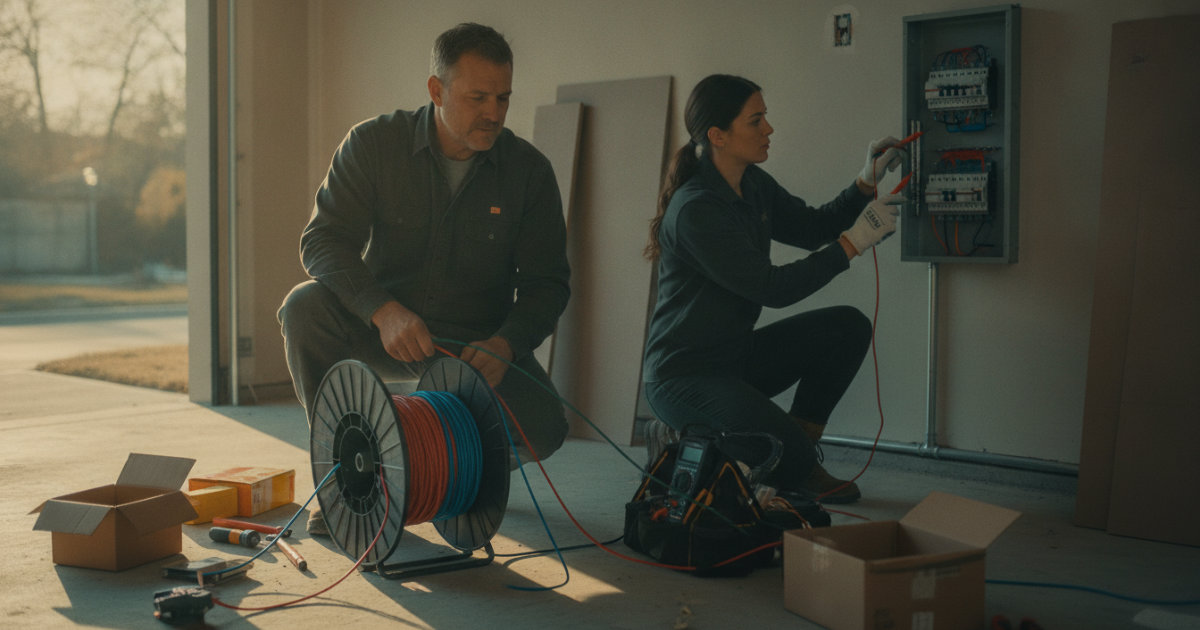
Define the role by the work your shop actually sells. In residential and light commercial work, the common role split looks like this:
- Service electrician: diagnoses problems solo, sells work face-to-face with homeowners, handles troubleshooting, panel repairs, and code corrections. Needs strong customer communication.
- Rough-in tech: pulls wire, sets boxes, hangs fixtures under direction. Apprentice-level or second-year skill set, and the role where apprenticeship standards from the U.S. Department of Labor apply directly.
- Lead installer: runs the job site, coordinates with GCs, performs final terminations and testing, and signs off on quality. Often the person who catches a failed inspection before it happens.
Each role changes your operation differently. A service electrician needs a truck, a dispatch slot, and authority to log materials and notes from the field. A lead installer changes how you schedule multi-day jobs and who approves change orders internally. When you know which role you need, your dispatch requirements get clearer, and AceWatt's drag-and-drop dispatch board with skill-based scheduling suggestions will show you the exact skill gaps in your current crew before you write a job post. If every suggestion on the board keeps pulling the same two names for diagnostics-heavy jobs, that is your hiring signal.
Use Your Job Pipeline to Decide When and Whom to Hire
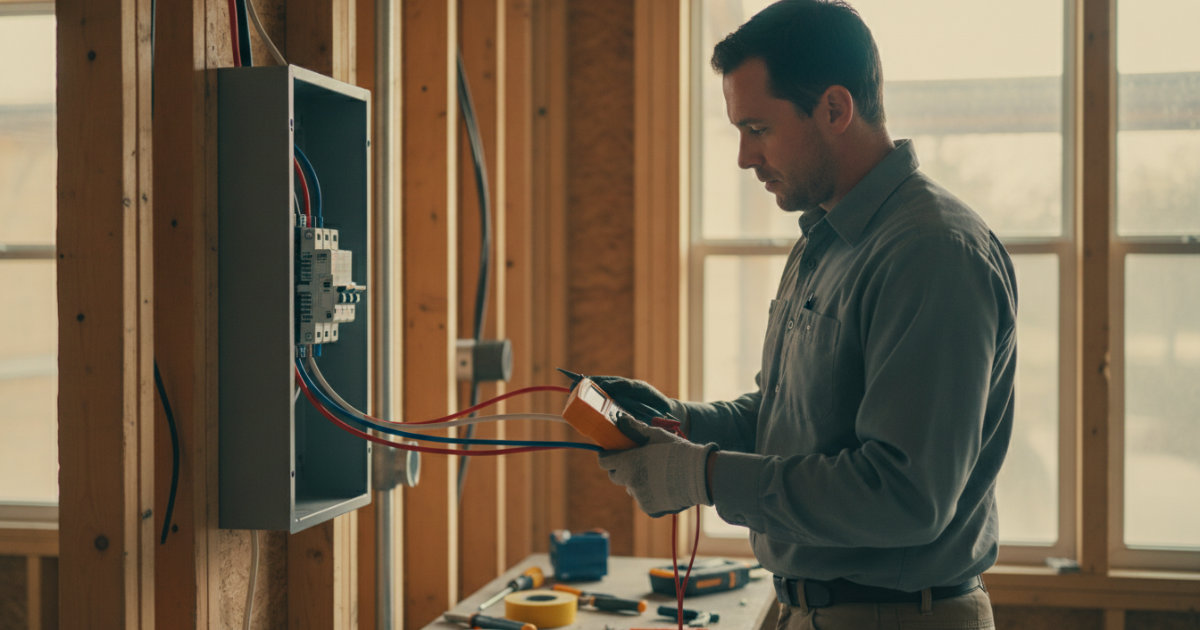
Hire against numbers, not exhaustion. Pull your last 90 days of quotes, jobs, and invoices and answer three questions:
- What is your quote-to-job conversion rate? If you are winning most of what you quote and turning work away, you have a capacity problem and hiring adds revenue. If you are losing bids, adding labor adds cost.
- Where does the bottleneck sit? Estimating, rough-in, trim-out, and service each stress the crew differently. Late-stage pressure (trim, testing, inspections) points to a lead installer. Quote backlog points to estimating capacity, which AceWatt's AI estimating can absorb by drafting quotes from a job walk, photos, a typed description, or an uploaded PDF plan set, using your pricebook and assembly templates for your review.
- What is your unpaid pipeline worth? AceWatt tracks the financial pipeline from quote to job to invoice to paid, and its invoice aging report (0 to 30 days through 120+ days) shows whether cash flow can fund a new wage. Hiring into a cash crunch with 90-day-old receivables is a common and avoidable mistake.
For a data-grounded view of what contractors are spending on software and staffing systems in 2026, our state of electrical contractor software trends piece covers current adoption and cost patterns across the trade.
Create a Repeatable Interview and Skills Evaluation Process
A structured interview has three parts, and you should run all three for every candidate.
Part 1: Phone screen (15 minutes). Confirm license or apprentice status, years in the trade, and the scope of work they have done: residential, commercial, industrial, or a mix. Ask what percentage of their work was service versus new construction. Screens exist to filter, so use a fixed question list and score it the same way for everyone.
Part 2: Skills evaluation. Give real, supervised tasks from your actual work. A short practical evaluation can include identifying a miswired receptacle on a test board, explaining how they would test a circuit before energizing it, or walking through a panel replacement sequence. Safe work practices matter here: OSHA and the NFPA 70E standard define arc-flash and shock training expectations for qualified electrical workers, and OSHA's electrical construction standards are the baseline any candidate should recognize. A candidate who shrugs at lockout/tagout basics is a liability regardless of speed.
Part 3: Situational interview. Ask about the moments that cost shops money. Examples:
- "A homeowner asks you to do work the permit does not cover while you are on site. What do you do?"
- "You find a burnt feeder lug mid-job and the customer is not home. Walk me through your next hour."
- "How do you document materials used when the customer portal quote did not include them?"
Their answers reveal whether they fit a system-based shop or only work under close supervision.
Onboard Electricians With Clear Systems, Not Trial by Fire
The first two weeks set the pattern for years. A written 30-day plan should cover:
- Safety and compliance basics: your lockout/tagout procedure, PPE policy, and ladder and lift rules. New hires should acknowledge these in writing on day one.
- Field workflow training: how to clock in and out from their phone, log notes and expenses, and follow the job schedule. AceWatt records clock-in location and flags whether the tech was at the job site, which removes the trust-but-verify phone calls that burn owner time. When signal is weak in a basement or a metal building, the app queues clock events, field notes, expenses, and leads, then sends them when the connection returns.
- Documentation standards: how you run job walks. With AceWatt's AI Job Walk, a tech can walk a site dictating notes and snapping photos, and the system generates a report with material suggestions. Train new hires on this on week one so documentation is a habit, not a rescue operation.
- Billing expectations: who can promise what to a customer, how change orders get approved inside the company, and how quotes convert to invoices. In AceWatt, when a customer accepts a quote, a draft invoice is created with the quote's line items copied over, so nobody re-types anything and the new hire learns that paperwork closes the job, not the punch list.
Role-based access in AceWatt means you can give a new tech exactly the access they need on day one and expand it as they earn trust, which is safer than all-or-nothing admin credentials.
Track New Hires With Job Data, Time Logs, and Invoice Outcomes
At 30, 60, and 90 days, review the hire with data instead of anecdotes:
- Utilization: hours logged on job sites versus hours paid. Phone-based clock in and out with job-site location flags makes this a report, not an argument.
- Billable contribution: jobs worked, invoices generated from those jobs, and payment status. Because AceWatt connects quotes, jobs, invoices, and payments in one pipeline, you can see whether the new electrician is producing work that actually gets billed and collected.
- Rework and callback rate: jobs that required a second visit. A rising callback rate in month two is a coaching signal, not necessarily a termination signal.
- Collections discipline: AceWatt sends automatic email reminders for overdue invoices at 1, 7, 14, and 30 days past due and marks unpaid invoices overdue, so slow-paying customers do not get hidden inside a "productive hire" narrative.
This same data loop feeds your next hiring decision. If your Scale-tier shop is running route-optimized dispatch across many stops and utilization is still pinned above 85 percent, the case for hire number two is already written. For a deeper look at how billing workflows and software choices affect contractor cash flow, see our electrical contractor accounting comparison for 2026.
Hiring well in 2026 is less about finding superheroes and more about building a repeatable system: pipeline data to justify the hire, a structured evaluation to select the right role, digital onboarding to standardize the work, and job-level financial tracking to prove the outcome. AceWatt starts at $49 per month on the Starter plan and supports up to 5 users on the $99 Growth plan, with a 14-day trial so you can put the pipeline and dispatch data in place before your next job post goes live.
FAQ
How do I know if my electrical shop can afford another electrician?
Look at your quote-to-job conversion rate, backlog hours, and invoice aging together. If you are winning most quotes, declining work, and your receivables are current, a hire converts directly to revenue. AceWatt's financial pipeline and invoice aging report (0 to 30 days through 120+ days) put those three numbers on one screen.
What skills should I test for when hiring a service electrician versus a rough-in tech?
Test service candidates on diagnostics: miswired circuits, testing procedures, and how they communicate findings to a homeowner. Test rough-in candidates on speed and accuracy of box setting, wire pulling, and following a lead's direction. Both should demonstrate basic safety knowledge consistent with OSHA electrical construction standards.
How long should I give a new electrical hire before deciding?
Use a structured 90-day review with checkpoints at 30 and 60 days. Track site hours, billable contribution, and callback rate from your job data rather than impressions. A hire who documents work well and needs coaching is usually worth keeping; one who resists the workflow rarely changes.
Can software really help with hiring, or is it just for scheduling?
Software justifies the hire, structures the onboarding, and measures the outcome. AceWatt's dispatch board reveals skill gaps, AI Job Walk standardizes documentation training, and the quote-to-paid pipeline shows whether a new electrician is generating billable, collected revenue.
How do I keep a new electrician from depending on me for every decision?
Write down your escalation rules (what they can approve, what needs you), train them on the field workflow early, and use role-based access so they can work independently inside clear limits. Documented job walks and voice-updated project notes in AceWatt reduce the constant phone calls that keep owners tethered.
Start your 14-day AceWatt trial today and put the pipeline, dispatch, and billing data behind your next hiring decision.