
Electrical Proposal Software: Good-Better-Best Estimates for Electricians
Quick answer: Electrical proposal software helps contractors create, send, track, and follow up on tiered job proposals. The best electrical proposal software replaces one-number PDFs with good-better-best pricing tiers, tracks whether the customer opened the proposal, and automates follow-up so no deal goes cold. Electricians evaluating electrical proposal software should verify CRM integration, payment workflows, and whether the tool supports electrical-specific scope documentation.
Every electrical contractor knows the feeling: you spent two hours on a detailed estimate, emailed it to the customer, and never heard back. Was your price too high? Too low? Did they even open the email? You'll never know, because your "proposal" was a single number on a PDF.
Electrical proposal software changes this equation. Instead of a take-it-or-leave-it quote, you present structured proposals with tiered options, track whether the customer opened them, and automate follow-up so no deal goes cold. The shift from "here's my price" to "here are your options" is one of the highest-impact changes an electrical contractor can make. The National Electrical Contractors Association (NECA) publishes guidance on estimating and proposal standards that contractors should reference alongside any proposal tool.
This guide covers what to look for in electrical proposal software, how good-better-best estimating works, and how to compare the top options.
What Is Electrical Proposal Software?
Electrical proposal software helps contractors create, send, track, and follow up on job proposals. Unlike simple estimate templates, proposal software handles the full cycle:
- Scope documentation: capture what the job involves, including site conditions and photos
- Pricing presentation: show options, not just a single number
- Customer delivery: send proposals digitally with open tracking
- Follow-up automation: remind you when proposals are pending, expired, or ready for a nudge
- Approval and conversion: let customers approve proposals electronically and convert them to jobs
Proposals vs estimates vs quotes
These terms get used interchangeably, but they're different:
- Estimate: an approximate cost calculation, often verbal or informal
- Quote: a specific price commitment for a defined scope, usually time-limited
- Proposal: a structured presentation of options with scope details, terms, and pricing tiers
Proposals win more jobs because they give customers a choice instead of a yes/no decision.
Why Good-Better-Best Estimates Win More Jobs
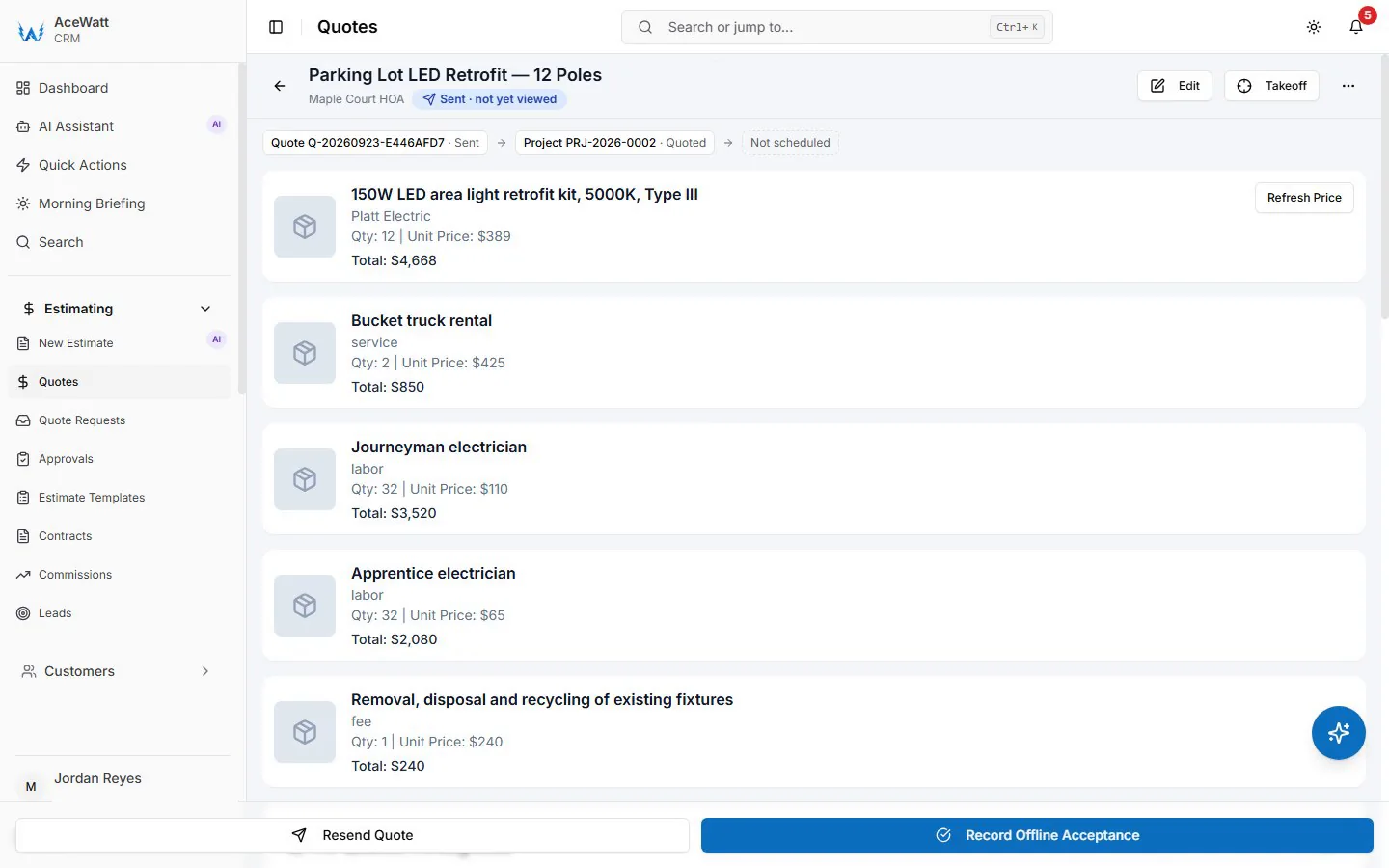
The good-better-best pricing model presents three tiers for every job:
- Good: the minimum viable scope, priced to be competitive
- Better: the recommended scope with quality upgrades or additional coverage, priced for your target margin
- Best: the comprehensive scope with premium materials, extended warranty, or additional services, priced for higher revenue
How tiered estimates protect your margins
When you present a single price, the customer has two choices: accept or reject. When you present three tiers, the customer compares your options to each other instead of comparing you to the competition. Most customers pick the middle tier, which should be priced at your target margin.
Close rate data
Contractors who switch from single-price quotes to good-better-best proposals typically see their close rates increase. The improvement comes from two factors:
- Choice architecture: customers feel enabled when they pick from options
- Value anchoring: the premium tier makes the recommended tier look reasonable
- Scope clarity: three tiers force you to define exactly what's included at each level
How Electrical Proposal Software Works
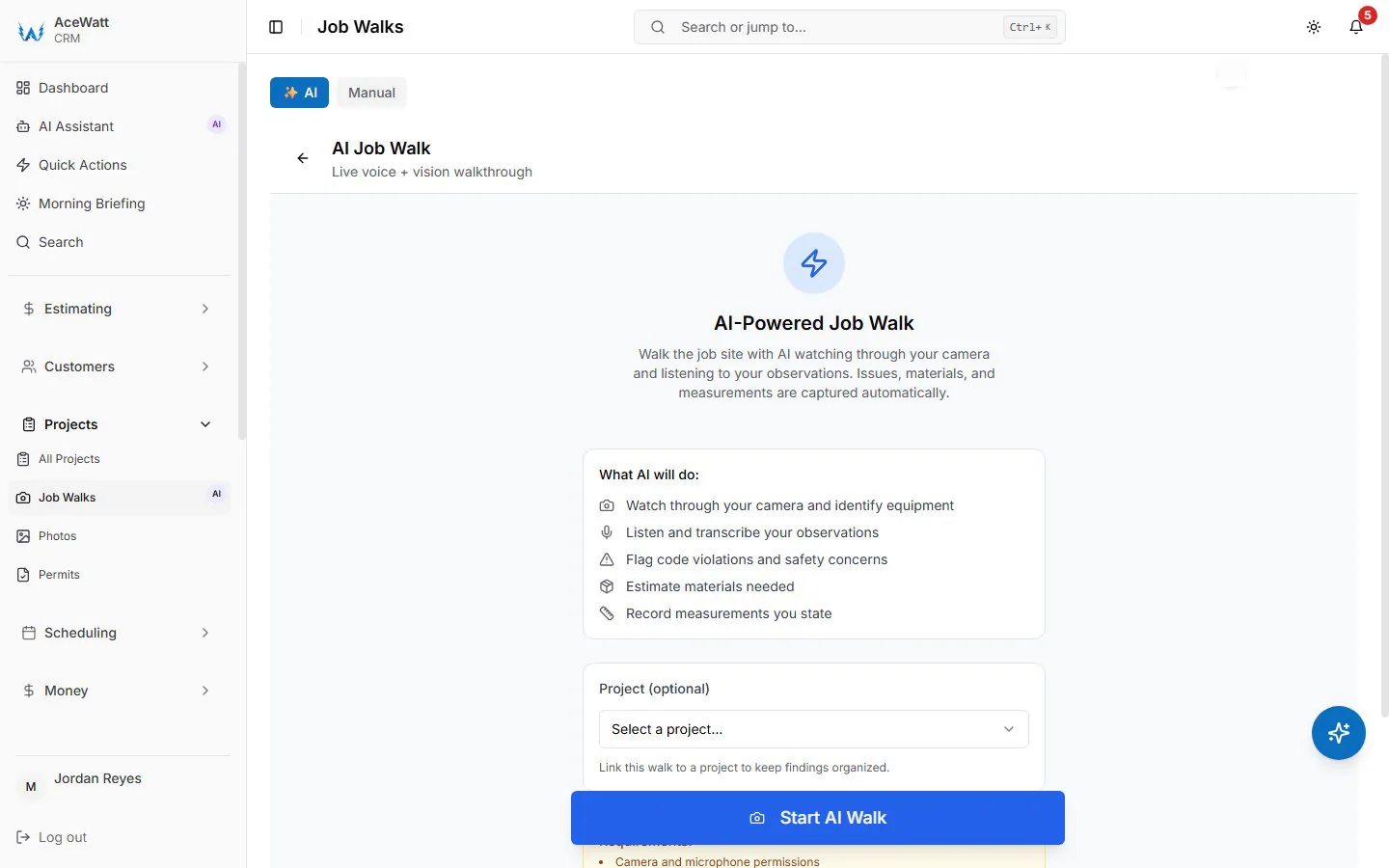
Step 1: Capture job scope
Walk the site, document conditions, take photos, and record observations. Modern tools let you capture scope by voice; AceWatt's AI job walk transcribes your notes and structures them for estimating.
Step 2: Build the proposal
Select materials, labor hours, and markup. Good proposal software auto-generates three pricing tiers from your cost inputs. Automated estimating speeds this up by suggesting line items based on job type.
Step 3: Present to the customer
Send a branded proposal document with clear scope descriptions, tiered pricing, and terms. Some tools also track when the customer opens them.
Step 4: Follow up on time
Set a follow-up date. If the customer hasn't responded in 48 hours, call or send a nudge; some tools automate that nudge and show how many times the proposal was opened.
Step 5: Convert to job and invoice
When the customer approves, convert the proposal to an active job with one click. Approved scope and pricing carry forward to the work order and invoice.
Top Electrical Proposal Software for 2026
AceWatt: Best for AI-Powered Proposals
AceWatt connects the full workflow from job walk to proposal to invoice. The AI-powered quoting engine converts site notes into structured estimates and generates good-better-best tiers automatically.
Key features:
- AI job walk → estimate → proposal in one flow
- Automated good-better-best tier generation
- Voice documentation for site capture
- Automatic email reminders on overdue invoices
- Connected invoicing and job tracking
Best for: Electrical contractors who want AI-assisted proposals connected to invoicing. Start a free trial.
ServiceTitan: Best for Large Residential and Commercial
ServiceTitan includes a proposals module within its comprehensive trade management platform. It handles flat-rate pricing boards, proposal templates, and approval workflows. For a deeper look at tools built around flat-rate price menus specifically, see our electrical flat-rate software guide.
Key features:
- Flat-rate price book integration
- Proposal templates with e-signature
- Integrated with dispatch, payroll, and inventory
Best for: Large operations with 10+ trucks and dedicated office staff. Enterprise pricing, contact for quote.
QuoteIQ: Best for Options Estimates
QuoteIQ built its platform around the good-better-best model. Their "Options Estimates" feature generates tiered pricing presentations from scope inputs.
Key features:
- Good-better-best estimate builder
- Customer-facing presentation
- Approval tracking
Best for: Contractors who primarily want tiered estimating without a full CRM. Pricing starts at accessible monthly rates; check their site for current plans.
Housecall Pro: Best for Simple Service Proposals
Housecall Pro handles proposals for small service businesses with straightforward scope and pricing.
Key features:
- Service proposal templates
- Online approval
- Integrated with scheduling and invoicing
Best for: Small residential service shops with simple quoting needs.
Comparison Table: Electrical Proposal Software 2026
| Feature | AceWatt | ServiceTitan | QuoteIQ | Housecall Pro |
|---|---|---|---|---|
| Good-better-best tiers | AI-generated | Manual setup | Core feature | Basic |
| AI-assisted quoting | Yes | Limited | No | No |
| Voice documentation | Yes | No | No | No |
| Automated follow-up | Overdue invoices only | Yes | Limited | Limited |
| Connected CRM | Yes | Yes | No | Yes |
| Invoicing | Yes | Yes | No | Yes |
| Trade-specific | Electrical contractors | All trades | All trades | All trades |
| Mobile app | Yes | Yes | Yes | Yes |
| Pricing | Free trial available | Enterprise / custom | Monthly plans | Monthly plans |
How to Choose Electrical Proposal Software
Solo / small shop (1 to 3 trucks)
Focus on speed and simplicity. You need software that generates proposals fast so you can get back to billable work. Automated follow-up is the highest-ROI feature at this stage because it closes deals you'd otherwise lose to forgetfulness.
Growing shop (3 to 10 trucks)
Focus on consistency and tracking. Every technician should be able to generate a proposal that matches your pricing structure and brand. Proposal tracking and analytics show you which types of jobs close at the highest rates.
Large shop (10+ trucks)
Focus on integration and scale. Proposals should connect to your dispatch, accounting, and payroll systems. Standardized pricing boards ensure every technician quotes consistently.
Must-have features
- Tiered pricing presentation (good-better-best)
- Open and view tracking
- Automated follow-up reminders
- Electronic approval
- Conversion to job and invoice
- Mobile access for field use
Why Proposals Without Follow-Up Are Wasted Effort
The best proposal in the world is worthless if you don't follow up. Industry data suggests that 40% or more of contractor estimates never receive a follow-up call. That's nearly half your quoting effort going to waste.
Proposal software with automated follow-up solves this. When the system tracks proposal status and triggers reminders, you stop losing deals to silence. The contractor who follows up wins the job, even when their price isn't the lowest.
How AceWatt Connects Proposals to the Full Workflow
AceWatt isn't just a proposal tool; it's the full electrical contractor workflow connected end to end:
- AI job walk: document site conditions by voice
- Automated estimating: convert notes to structured estimates with tiered pricing
- Proposal delivery: send branded proposals by email with a customer portal link
- Follow-up tracking: pending proposals stay visible so you know which ones to call about
- Customer approval: electronic approval converts proposal to job
- Invoicing: approved scope and pricing flow directly to the invoice
No re-entering data. No disconnected spreadsheets.
Ready to upgrade your electrical proposals? Try AceWatt free or get in touch.
FAQs
What is electrical proposal software?
Electrical proposal software helps contractors create, send, track, and follow up on structured job proposals. It typically includes tiered pricing presentation (good-better-best), customer approval workflows, and automated follow-up.
How do good-better-best estimates work for electricians?
Good-better-best estimates present three pricing tiers for the same job: a basic scope at the lowest price, a recommended scope at your target margin, and a comprehensive scope at a premium price. Most customers pick the middle tier, which protects your margins while giving them a sense of choice.
How much does electrical proposal software cost?
Pricing varies by platform. Trade-specific tools like AceWatt offer free trials with monthly plans starting at accessible rates. Enterprise platforms like ServiceTitan require custom quotes. See AceWatt pricing for current plans.
Can AI help write electrical proposals?
Yes. AI-powered tools like AceWatt's automated estimating can convert job-walk notes into structured estimates and generate tiered pricing proposals. This speeds up proposal creation from hours to minutes while maintaining accuracy.
What's the difference between an estimate and a proposal?
An estimate is an approximate cost calculation. A proposal is a structured presentation with scope details, tiered pricing options, terms, and a professional format. Proposals close more jobs because they give customers choices instead of a single take-it-or-leave-it number.
Related Reading
- See all CRM features for electrical contractors in one platform.
- bid software for faster, sharper bids
- Electrical Proposal Software: Good-Better-Best Guide
- AceWatt vs QuoteIQ comparison — how the two estimating-heavy platforms compare for electricians.