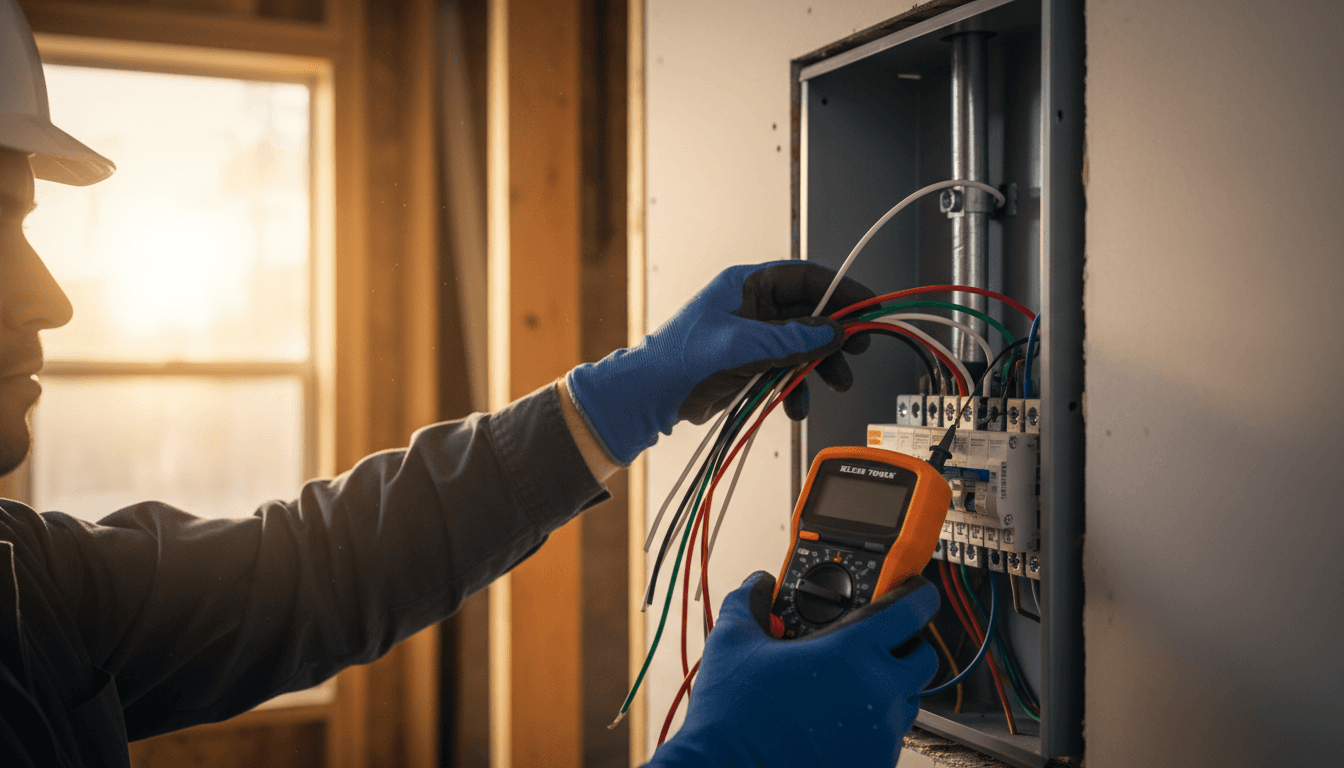
Is Your Home's Power Center Failing? How to Spot Trouble Before It Starts
The electrical panel is the central nervous system of your residence. It routes incoming electricity from the utility company and distributes it to individual circuits throughout the building. Without a properly functioning panel, your home's entire electrical infrastructure is compromised. Modern households consume significantly more power than they did twenty years ago, meaning a panel that was once sufficient may now be a severe bottleneck. Recognizing the signs you need an electrical panel upgrade is critical to preventing catastrophic property damage and ensuring your daily routine is not interrupted by constant power failures.
At AceWatt, we routinely encounter aging infrastructure that simply cannot support contemporary energy demands. Understanding the physical and operational warnings of a failing system is the first step in protecting your property.
1. Your Home is Over 25 Years Old
If your residence was built before 1999, you are approaching the end of your electrical panel's expected lifespan. The average service panel lasts between 25 and 40 years, depending on the manufacturer, the quality of the original installation, and environmental factors like humidity. Inside an aging panel, thermal cycling causes wire connections to loosen over time. This degrades the bus bars, the metal conductors where circuit breakers snap into place, leading to inconsistent power distribution. If you are asking yourself how long does an electrical panel last, consider that a unit installed in the late 1990s is already operating on borrowed time.
Homes built in the 1980s or earlier were typically wired for 100-amp or even 60-amp service. Today's baseline for a single-family home is 200 amps. Upgrading ensures your system can handle the continuous electrical load without overheating.
2. Frequent Circuit Breaker Tripping
Circuit breakers are engineered to trip when a circuit is overloaded, acting as an automatic safety switch to prevent wires from melting. If a breaker trips occasionally, it is likely doing its job correctly. However, if you find yourself walking to the basement or garage to reset a breaker every few days, you are dealing with a systemic issue.
Frequent tripping means your total electrical demand exceeds the panel's capacity to distribute power safely. This happens often in homes that have added square footage or new appliances without upgrading the underlying electrical service. One of the most definitive signs of bad circuit breaker hardware is a breaker that will not stay reset even after you have unplugged everything on that specific circuit. This indicates internal mechanical failure within the breaker itself or a dead short in the panel.
3. Flickering or Dimming Lights
When your air conditioning compressor kicks on, it requires a massive, split-second surge of electricity known as inrush current. In a properly functioning electrical system, the panel absorbs this demand easily. In a failing or undersized system, that sudden draw drains power from other circuits, resulting in visible flickering lights or a brief drop in brightness.
While a single flickering bulb might just be a loose lamp socket, consistent dimming across multiple fixtures when heavy appliances cycle on indicates voltage drop. This happens when the panel can no longer manage the inrush current or when the main service conductors are undersized. Ignoring this issue puts undue stress on sensitive electronics like computers, televisions, and smart home hubs, which require stable voltage to operate correctly.
4. Burning Smells or Visible Scorch Marks
An electrical fire rarely starts as a roaring flame; it usually begins as smoldering insulation deep within the panel. If you notice a persistent odor of melting plastic or a faint "fishy" smell near your electrical box, you must act immediately. This smell is created by heat-resistant wire insulation and plastic components overheating.
Visible signs of this heat damage include scorch marks around individual breakers or around the main breaker handle. If you notice this, it indicates an active arc fault. The connections inside the panel have loosened, causing electricity to jump across gaps rather than flowing smoothly through the wire. Arcing generates extreme heat and is a primary cause of residential electrical fires. This requires immediate, emergency disconnection and an inspection by a licensed electrician.
5. You Are Adding Major Appliances or an EV Charger
Upgrading your home's infrastructure often necessitates upgrading its power supply. Modern additions require dedicated, high-amperage circuits that simply do not exist in older panels. For example, installing a Level 2 Electric Vehicle Supply Equipment (EVSE) charger requires a dedicated 40-amp or 50-amp 240-volt circuit, compliant with National Electrical Code (NEC) Article 625.
Similarly, installing a hot tub, a tankless water heater, or converting from a gas furnace to an electric heat pump will drastically change your home's load calculation. If your current panel lacks physical space for new breakers, or if adding the new load would exceed 80% of the panel's total capacity, an upgrade is mandatory. Our technicians at AceWatt frequently install dedicated circuits and complete panel replacements specifically to accommodate these modern, high-draw systems.
6. Reliance on Multiple Power Strips
Older homes were not wired for the sheer volume of consumer electronics used today. A typical bedroom or living room might only feature one or two duplex receptacles, forcing homeowners to rely heavily on power strips and extension cords.
If your rooms look like a rat's nest of extension cords, it means your home's electrical layout is no longer functional. Relying on daisy-chained power strips to run televisions, gaming consoles, modems, and lighting is a direct violation of NEC Article 400, which prohibits using flexible cords as a substitute for fixed wiring. Upgrading your panel allows you to add entirely new, dedicated circuits to these high-demand rooms, eliminating the need for unsightly and hazardous extension cords.
7. Your Panel Uses Fuses Instead of Breakers
If your home still uses a screw-in fuse box instead of modern toggle-style circuit breakers, your electrical system is entirely obsolete. Round, screw-in fuses were the standard decades ago, but they present a distinct safety risk. A homeowner facing a blown fuse might simply replace a 15-amp fuse with a 30-amp fuse to stop it from blowing. This dangerous workaround allows the wire to carry twice its safe maximum current, guaranteeing an eventual fire.
Additionally, major insurance providers often refuse to write policies on homes with fuse boxes due to the outdated electrical panel dangers they present. The same applies to certain notorious brands of older breaker panels. Federal Pacific Electric (FPE) Stab-Lok panels, widely installed between 1950 and 1980, have a well-documented failure rate. Independent testing has revealed that a significant percentage of FPE breakers fail to trip under overload conditions. Recognizing these Federal Pacific electric panel hazards and replacing the equipment immediately is vital to maintaining a safe living environment.
Protect Your Home and Family Today
Your electrical panel is not a "set it and forget it" piece of hardware. It is an active, mechanical system that degrades over time and must be scaled to match your specific energy consumption. Operating an obsolete or damaged panel puts your property, your belongings, and your family at severe risk of an electrical fire.
When evaluating the electrical panel replacement cost, homeowners must weigh the investment against the financial and physical devastation of an electrical fire. Generally, a standard service upgrade to 200 amps ranges between $1,500 and $3,000, factoring in the new panel, the meter base, grounding electrodes, and labor. This upgrade also increases your property value, improves the efficiency of your HVAC system, and provides the necessary capacity to power future technological advancements.
If you are observing any of these warning indicators, it is time to consult with professionals. The certified electricians at AceWatt specialize in residential electrical panel replacements, service upgrades, and comprehensive safety inspections. We will evaluate your current system, calculate your exact power needs, and provide a seamless, code-compliant installation that secures your home for decades to come. Contact AceWatt today to schedule your panel assessment.