
Electrical Dispatch Software for Emergency Service Routing: A 2026 Guide for Electrical Contractors
Emergency calls are the most profitable work an electrical shop takes and the least forgiving to run off a whiteboard and a group text. The homeowner who smells burning plastic at a receptacle at 9:30 pm is calling three contractors, and the first qualified tech on site usually closes the job. This guide covers how dispatch software built for electricians handles urgent calls, from intake and GPS routing through documentation, estimating, invoicing, and payment.
1. Why Emergency Electrical Calls Break Manual Dispatch in 2026
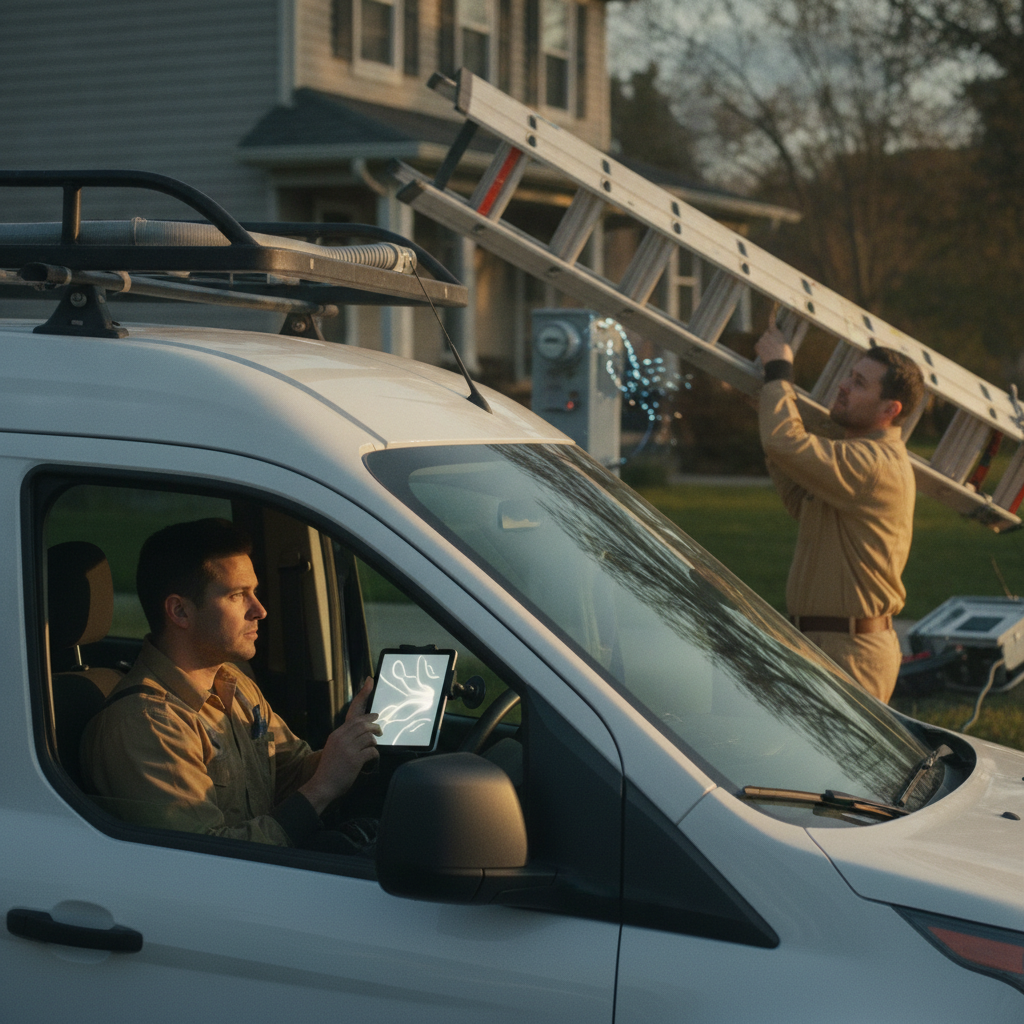
Picture a Friday evening lineup: a homeowner reports half the house is dark, which usually means a lost leg on the utility side of the meter. A restaurant calls at 6:40 am about a tripped main before open. A storm has loosened a service mast two towns over. Somewhere in the same hour, a burning odor at a panel.
Manual dispatch fails at four points:
- Call capture. The office is on one line, the owner is on a ladder, and the second call rolls to voicemail. A homeowner with a sparking receptacle does not leave a voicemail. That customer calls the next name in the search results.
- Triage. A paper schedule lists a hazard and a ceiling fan install as equal entries. Nothing shows which customer gets the tech first.
- Assignment. The office calls one tech mid panel swap, then another, and ten minutes of the customer's patience disappear.
- Record. An address on a sticky note, a scope relayed by phone, no photos. If the invoice is disputed three weeks later, there is nothing to point to.
Conditions in 2026 raise the stakes. Customers expect live ETAs because every delivery app they use provides one. With licensed electricians still scarce, each tech's hours have to cover more calls than they did five years ago.
2. What Electrical Dispatch Software for Emergency Service Routing Actually Does

Electrical dispatch software for emergency service routing replaces guesswork with data. Every request, whether it arrives by phone, text, or web form, lands in one queue with a priority tag and a problem type: partial outage, burning odor, panel failure, storm damage.
The system then answers three questions in seconds: which techs are on the clock, where each one is right now, and who is qualified for this specific job. A lost leg diagnostic needs someone comfortable testing at the meter base and coordinating with the utility. A damaged mast needs a tech who knows the power company's reconnect sequence and the inspection requirements that come with it. The assignment reaches the tech's phone with the address, contact name, problem notes, and customer history from the CRM, including past work like a panel upgrade or AFCI additions.
From there the job is timestamped through assigned, en route, on site, diagnosed, quoted, and completed. That chain of records turns a chaotic night into billable, defensible work.
3. GPS Routing for Electricians: Getting the Right Crew to the Job Faster
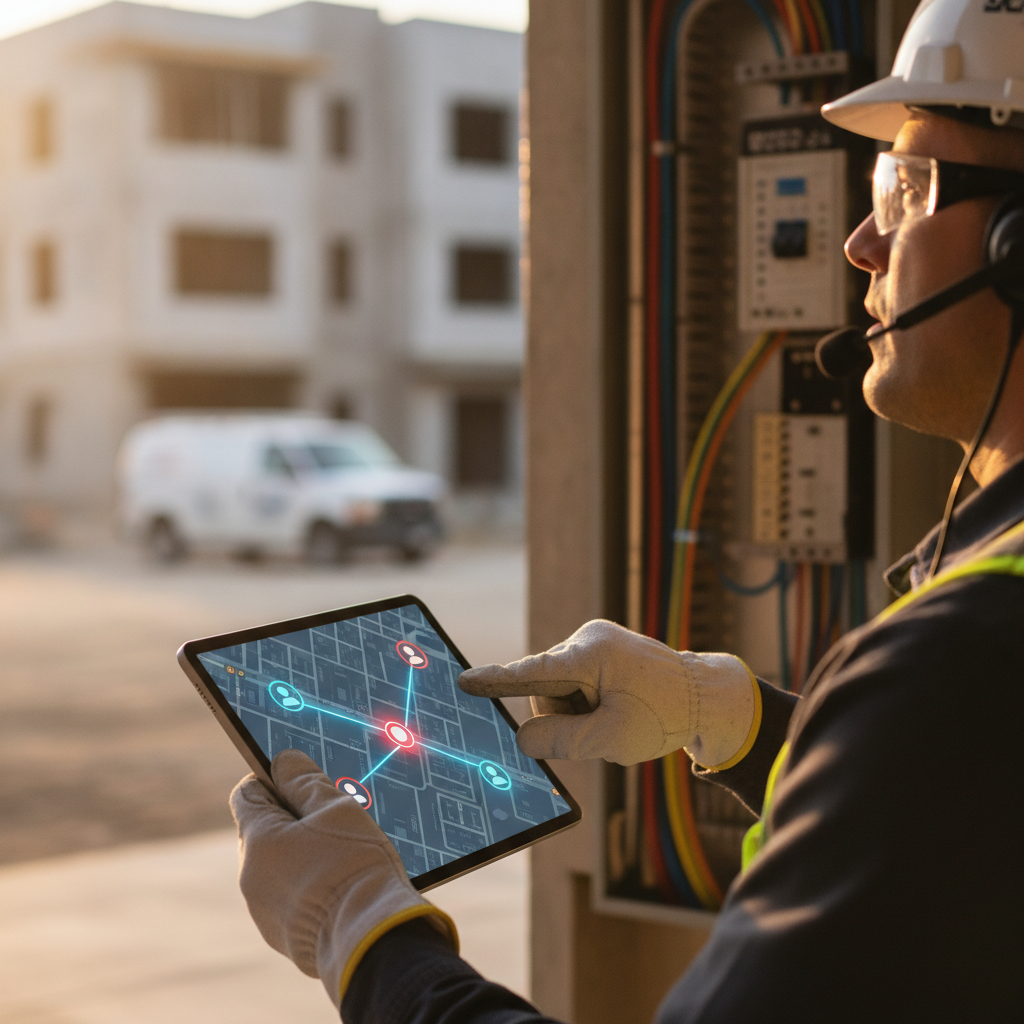
Speed on an urgent call comes down to two decisions: which tech and which route. Electrician dispatch software with live GPS answers both.
Nearest qualified tech. The dispatch map shows every available technician by current location, and skill tags keep the assignment honest. A failed transfer switch at a commercial site routes to the journeyman with generator experience, while a tripping AFCI at a residence can go to a first-year apprentice riding with a lead. Distance alone is a trap, because the nearest tech without the right experience turns one call into two.
Traffic-aware routing. In a metro area, drive times between jobs swing by 20 minutes or more depending on the hour. Routing on live traffic instead of straight-line distance is the difference between quoting a 45-minute arrival and delivering a 70-minute one.
Call grouping. On nights with multiple emergencies, stops are sequenced into a single route, whether the dispatcher works from a desk or runs an emergency electrician routing app on a phone between calls. Two no-power calls six blocks apart should be one cluster, with the second customer given an accurate window while the tech is still on the first.
4. Real-Time Crew Tracking for Emergency Electrical Work
GPS tracking for electrical crews lets office staff make arrival promises they can keep. When a customer calls asking where the tech is, the answer comes from a live map instead of a guess.
Accurate arrival windows. Once a tech is dispatched, the customer receives an automatic text with the tech's name, photo, and a narrowing ETA. On a hazard call, that message holds the job. A customer watching a smoking receptacle with no arrival information calls every competitor in town.
Rerouting when priorities shift. A tech is twenty minutes into a drive to a scheduled receptacle replacement when a nursing home reports a dead kitchen circuit feeding refrigeration. The dispatcher pulls him off the routine job, pushes it to the morning, and the routine customer receives an automatic reschedule notice. The routine job slips a few hours. The emergency is covered.
Safety. For solo electricians on 11 pm basement calls, live tracking means someone always knows where the tech is. For shops, location history settles any dispute about arrival times before it becomes a chargeback or a bad review.
5. How AI Estimating and Job Walk Documentation Speed Up Emergency Response
A fast arrival earns nothing if the paperwork drags. Two features close that gap.
AI Voice and Job Walk Documentation. An electrician diagnosing a failed panel is in arc-rated PPE per NFPA 70E, meter in hand, with no practical way to thumb-type. Voice capture takes the findings hands-free: 200 amp panel, bus damage at stabs 13 and 14, breaker melting visible, circuit directory illegible, existing dwelling load calculation needed per NEC 220.83. The transcription attaches to the job alongside photos of the panel interior, the directory, and the meter base. That record backs the estimate, the invoice, and any later dispute.
AI Estimating. The diagnosis has to become a price while the customer is still worried about safety. AI estimating for electrical contractors turns the documented findings into an itemized quote: panel replacement with permit, materials at current pricing, labor hours at the after-hours rate, and code-driven items such as a rewritten circuit directory per NEC 408.4. The customer approves by text and parts are ordered the same night. Work that used to eat ninety minutes of evening paperwork closes before the tech leaves the driveway.
6. Automated Follow-Up and Invoicing After the Emergency Call
Emergency work is often performed at night, and billing should not wait until the office reopens Monday.
Invoices built from the job record. Electrician invoicing software assembles the bill from data the system already holds: labor hours from the status timestamps, materials from the approved estimate, and the after-hours trip fee, which commonly runs $150 to $300 for the first hour at US shops. Nothing is retyped, so nothing is left off. The tech can take a card payment on a phone reader before leaving, or the customer pays from a text-to-pay link sent the moment the job is marked complete. For jobs needing parts, a deposit collected the same night covers the material order.
Payment visibility. Invoicing and payment tracking shows which emergency jobs are paid, which carry balances, and which customers need a reminder, so a busy week does not turn into a 60-day receivable.
Automated follow-up. After a panel replacement, a follow-up sequence confirms the inspection is scheduled, checks in at 30 days, and opens the conversation on a whole-house surge protective device, which the 2020 NEC requires on new dwelling services under Article 230.67. Review requests ride the same sequence once payment clears.
QuickBooks-Ready Exports. Every invoice, payment, and deposit hands off to QuickBooks as a ready export on Growth and Scale plans, so after-hours work reaches the books without rekeying and job costing shows whether the 1.5x emergency labor rate is actually profitable after drive time and callbacks.
7. Choosing Dispatch Software Built for Electrical Contractors, Not Generic Field Service
Most field service platforms advertise dispatch boards drawn around plumbing and HVAC work. The gaps show up during electrical emergencies, when there is no time to fight the software. Field service management for electricians has to handle the specifics of the trade:
- The price book should contain electrical materials and assemblies, from 200 amp load centers to GFCI breakers, at pricing an estimator can trust at 10 pm.
- Electrical contractor scheduling software should tag each tech by license level and skill, support apprentice supervision pairing, and keep master-level tasks off a journeyman's board.
- The job record should hold permit numbers, inspection dates, and outcomes, because a panel job closes when the inspector signs off.
- Electrical job tracking software should show the full chain from emergency intake to closed invoice, with problem types and statuses that match diagnostics, quoting, and code compliance.
- Accounting has to connect. If the platform cannot hand off to QuickBooks, night work gets rekeyed by hand and the books drift.
- After-hours intake has to work when the office is closed, through automated capture or a mobile flow the on-call tech can finish from the truck.
Run any candidate through those six checks before the first storm hits.
8. How AceWatt Supports Emergency Dispatch for Solo Electricians and Growing Shops
AceWatt is built for electrical contractors, from solo electricians to multi-crew shops, and it combines the tools in this guide in one system: AI-powered CRM, crew scheduling and dispatching, job tracking, AI Voice and Job Walk documentation, AI Estimating, automated follow-up, invoicing and payment tracking, and QuickBooks-ready exports on Growth and Scale plans (verify current integration depth during a demo).
For a solo electrician, AceWatt runs as an online electrician app on the phone already in your pocket. The same app for electrician work handles the call, the job record, the voice documentation at the panel, the text-approved estimate, and the invoice paid before you leave the driveway. When you are the dispatcher, the tech, and the office, the paperwork that used to wait for Sunday morning gets finished between calls.
For a growing shop, the dispatch board shows every tech by location and skill, the CRM keeps history attached to each address, and payment tracking keeps after-hours jobs from becoming collections work. Because estimating, job tracking, and the QuickBooks-ready export live in one system, the night crew's work reaches the books without an office manager rekeying it the next morning.
The result is one connected record for every emergency call: who called, what they reported, who was sent, what was found, what was quoted and approved, and what was paid. Book a walkthrough of AceWatt to see the emergency dispatch workflow on your own call types.