

Best Electrical Contractor Software in 2026: A Practical Guide for Electricians and Growing Shops
An electrical contracting business moves every job through the same chain: a phone call becomes an estimate, the estimate becomes a scheduled crew, the crew logs hours and materials, and the invoice gets paid. Most shops run that chain across a spreadsheet, paper tickets, text threads, and QuickBooks, and every handoff between those systems leaks time or money. Estimates get rebuilt after hours, change orders live as verbal approvals, invoices age because nobody had a spare hour to call, and office staff type the same job data into three places. The best electrical contractor software in 2026 connects the whole chain in one workflow, from the first call to the reconciled deposit in QuickBooks. This guide covers each link with the trade-specific details generic buyer guides skip: apprentice ratios, permit timelines, Article 250 takeoffs, T&M ticket math, and what automated follow-up actually does when you are the office and the field.
1. What Electrical Contractors Actually Need From Software in 2026
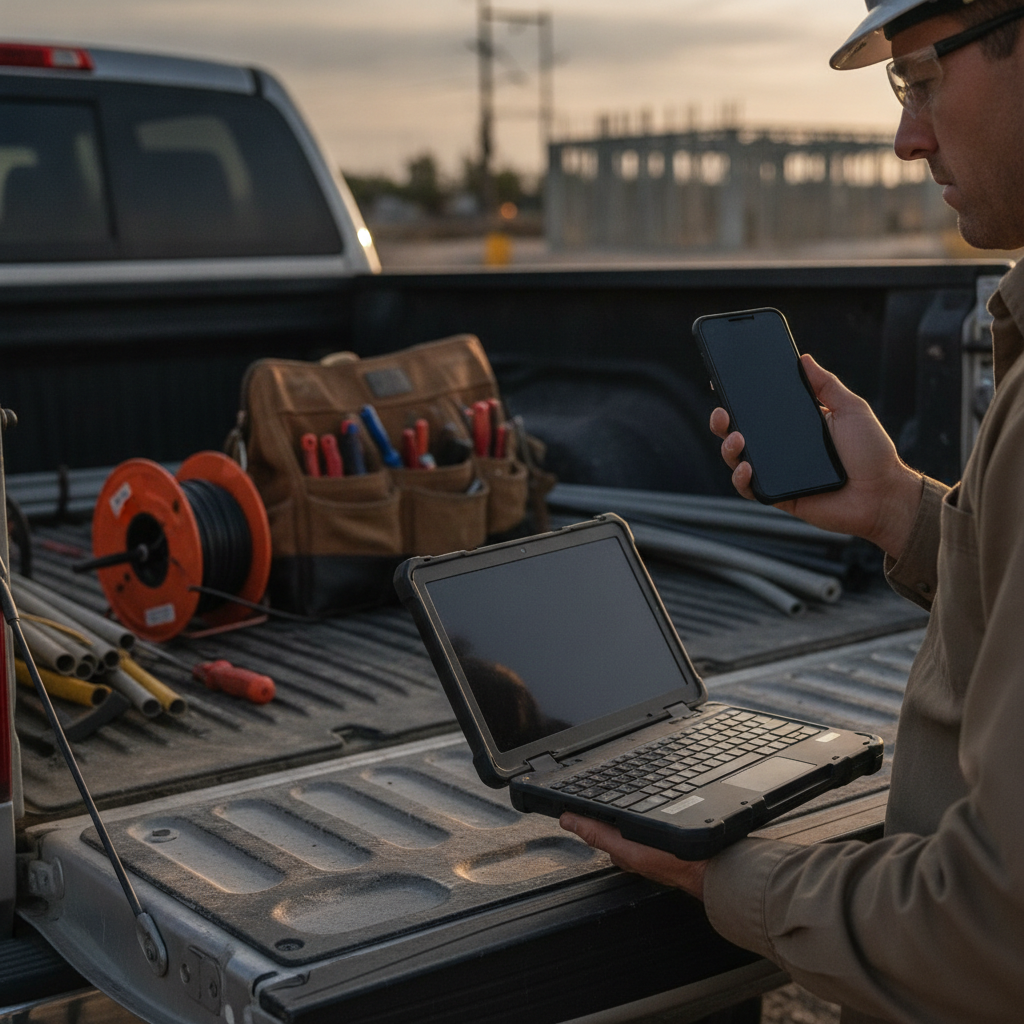
The operating environment this year leaves little slack. The 2026 NEC is moving through state adoption cycles, so your jurisdiction's requirements can differ from the town next door. Copper and THHN pricing still swings month to month. Customers expect a quote the same day they call and the option to pay by card from their phone.
In that environment, a shop needs five functions working as one workflow:
- Lead capture and customer records
- Estimating and proposals
- Scheduling and dispatch
- Job tracking and field documentation
- Invoicing, payment tracking, and accounting sync
Job management software for electricians earns its keep at the handoffs: when an accepted estimate becomes a job, the job becomes a schedule slot, the schedule becomes field notes, and the field notes become an invoice. Electrician field service management software built around HVAC and plumbing routes treats those handoffs differently, and electrical shops pay for the mismatch in re-entry hours and missed change orders.
Look also for trade-specific details: technician license and certification tracking with expiration dates, permit numbers and inspection dates stored per job, and a material price book you can update when copper moves without rebuilding every assembly.
2. AI Estimating vs. Manual Takeoffs: Where Electrical Shops Lose Money

Take a small commercial tenant fit-out, around 10,000 square feet. A manual takeoff means counting light fixtures, switches, and receptacles off PDF plans, measuring conduit runs, building wire pulls panel by panel, and pricing it all against current material costs. That is a 6 to 10 hour evening job, done after a full day in the field.
The losses show up two ways. First, the missed items: fire caulk, bonding bushings, couplings and connectors, AFCI breakers under 210.12(A), permit fees. A single missed $60 arc-fault breaker stings. Miss the bonding and grounding takeoff under Article 250 across a whole project and you have funded part of the job out of your own margin. Second, the bids you never submit. Shops doing manual takeoffs cover fewer jobs, and the ones they do cover get quoted late, after the customer has already hired whoever answered first.
AI electrical estimating software changes the math. Upload the plan set, photos or a typed description and the system drafts a quote for your review, priced from your pricebook and assembly templates, so you adjust a draft rather than build from scratch (plan device counts still need your check). AceWatt's AI Estimating works this way across all three job types:
- Residential service: quote from your flat-rate or T&M pricing within minutes of hanging up, with Good/Better/Best options the homeowner can choose on the spot.
- Commercial bids: full material and labor coverage, with room in the proposal for submittals, bonds, and retainage terms.
- Change orders: priced from the same material and labor data as the original bid, quoted from the field instead of scribbled on the back of a ticket and reconciled later.
That last point matters most. When field change orders use different cost math than the original estimate, margin leaks one ticket at a time.
3. Dispatching and Crew Scheduling for Residential, Commercial, and Service Calls

Electrical dispatch software solves problems a shared calendar cannot:
- Emergency calls. A no-power call at 7 a.m. means finding the nearest available tech with the right license class, rebooking their morning, and giving the homeowner an arrival window. A dispatch board with technician location and skill tags does this in seconds.
- Permit and inspection timelines. A service change or panel upgrade needs a permit and a passed inspection, and busy jurisdictions can run 5 to 10 business days for an inspection slot. The scheduler has to hold rough-in and final stages separately and keep crews from being double-booked while work waits on the inspector.
- Apprentice-to-journeyman ratios. State apprenticeship rules cap apprentices per journeyman on the job, commonly between 1:1 and 1:3 depending on the state and the apprentice's year. Scheduling two apprentices with one journeyman can put the shop out of compliance before anyone touches a tool.
- Multi-site commercial work. The same crew across three sites in a week, plus recurring contract work like thermographic scans and generator preventive maintenance.
When you evaluate electrical contractor scheduling software, test the overbooking protection specifically. A system that lets you book a crew back-to-back across a 45-minute drive, or schedule a final before the inspection date, creates the same fires you bought software to prevent. Solo electricians need the lighter version: an online booking calendar tied to estimate acceptance, so a request for a water heater circuit becomes a scheduled slot without a game of phone tag.
4. Job Tracking, Change Orders, and Field Documentation That Protect Margins
Every experienced contractor knows the script. The homeowner asks for a couple more receptacles mid rough-in. A 200-amp panel upgrade turns into a service entrance conductor replacement when the meter socket comes apart. A T&M job ends with a customer disputing hours they never saw logged.
Electrical change order software exists for exactly these moments, and the workflow is non-negotiable: capture the scope change, price it from your material and labor data, collect a signature, and attach photos before the work proceeds. A verbal yes carries almost no weight when the invoice arrives.
On the office side, job tracking should answer three questions without a phone call: what percent of the job is complete, what materials are on order, and what is actually holding the job, whether that is an inspection, a gear delivery, or a customer decision. When answering those questions means chasing the foreman by text, the office pays for the gap in hours.
5. Invoicing, Time and Material Billing, and QuickBooks Sync Without Double Entry
Look at the anatomy of a typical T&M ticket: a trip charge (commonly $75 to $150), labor hours at your service rate ($100 to $175 per hour in most US metros), materials marked up 20 to 40 percent over counter price, and any equipment rental. Electrical contractor time and material billing software should assemble all of it from the field record: hours logged on the job, materials pulled from your price list, and the trip charge become an invoice before the tech leaves the driveway. An electrical invoice app that takes card payment on site converts a 30-day wait into same-day cash.
For materials-heavy work like panels and switchgear, collect the deposit at signing and track it against the job. Payment tracking should show aging at a glance so nobody discovers in December that July still owes you money.
Then there is the accounting side. Most shops this size run QuickBooks Online, and the failure mode is familiar: re-typing every field invoice into QuickBooks at month end, then reconciling deposits against a spreadsheet of card charges while the CPA waits. A tool that earns the label QuickBooks electrical contractor software should pass one test: create a job, invoice it in the field, accept payment, and confirm the invoice, the payment, and the customer record appear in QuickBooks with no re-entry. AceWatt's answer today is QuickBooks-ready exports, with full sync in development: your invoice list as a spreadsheet and your payroll hours as a QuickBooks-format CSV for your bookkeeper, while job-level profitability lives in AceWatt, built from what actually happened instead of what someone remembered to type.
6. Automated Follow-Up, AI Voice Notes, and Job Walk Documentation
The work after the work is where solo electricians and small shops lose the most hours: confirming appointments, requesting reviews, and collecting unpaid invoices. Automated Follow-Up in AceWatt runs the collections part of that back office in the background:
- Deposit invoices. When a customer accepts a quote that asks for a deposit, the deposit invoice goes out by email with a pay link, and the balance invoice follows once it is paid.
- Overdue status. Unpaid invoices are marked overdue automatically, and the aging report sorts them from 0–30 to 120+ days.
- Invoice reminders. Automatic emails at 1, 7, 14 and 30 days past due, each with a payment link, collects balances without you making an awkward call from the top of a ladder.
None of this requires office staff, which is the point for a one-truck operation.
AI voice documentation removes the friction that keeps field notes from existing at all. The technician talks through findings while walking the job, and the AI structures the transcript into notes attached to the customer record. A finding like a kitchen with two-wire ungrounded circuits becomes a searchable quote trigger instead of a napkin scribble. The same applies to panel conditions, breaker brands on site, and the exact wording a customer used when they declined a recommendation.
Job walk documentation is the other margin protector, and photos carry the weight. Before opening walls and again at trim-out, pictures of existing conditions belong in the job record: the double-tapped breakers, the open splices, the panel with no spare slots. For an EV charger installation, the load calculation under Article 220 decides whether the job is a simple circuit or a panel upgrade with load management under Article 625. Documenting that calculation, along with the conditions you found, protects you when the customer calls a year later blaming the charger for a panel problem that predates your work.
7. How AceWatt Compares to Generic FSM and Construction Tools
Most shops evaluating software look at two categories first, and both come up short for electrical work in different ways.
Generic field service platforms like ServiceTitan and Jobber were built around HVAC and plumbing. Their price books, marketing automations, and job types assume equipment replacements and recurring maintenance plans. They handle dispatch and invoicing well enough, but nothing in them knows what a panel schedule is, reads an electrical plan, tracks license classes on the dispatch board, or prices a change order from an Article 250 takeoff. Electricians end up bending their workflow to fit the tool.
Construction takeoff tools like Bluebeam Revu and STACK handle the plan side but stop there. They mark up PDFs and count symbols, which is still manual work, and they connect to nothing downstream: no CRM, no dispatch, no follow-up, no invoicing. A shop doing commercial bids plus residential service needs a second and third system to cover the gap.
AceWatt covers the whole electrical workflow in one place: an AI-powered CRM, AI Estimating that drafts quotes from job walks, photos or uploaded plan sets, Automated Follow-Up for overdue invoices, crew scheduling and dispatching, job tracking, invoicing and payment tracking, AI voice and job walk documentation, and QuickBooks-ready exports. The comparison in one view:
| Capability | Generic FSM (ServiceTitan, Jobber) | Takeoff tools (Bluebeam, STACK) | AceWatt |
|---|---|---|---|
| Built around electrical work | No (HVAC and plumbing focus) | Estimating only | Yes |
| AI estimating from plan sets | No, flat-rate books only | Manual markup tools | Yes |
| Service dispatch with license tags | Partial | No | No (skill-based suggestions) |
| Automated follow-up and reviews | Yes, as an add-on | No | Overdue-invoice email reminders only |
| AI voice and job walk documentation | Limited | No | Yes |
| QuickBooks Online sync | Yes | Limited | Exports |
Generic FSM and takeoff tools each cover one section of the chain described in section 1. AceWatt covers the whole thing, and the gaps between systems are where re-entry hours and dropped change orders hide.
8. Choosing the Best Electrical Contractor Software for Your Shop Size
The right choice depends on where your shop's pain actually sits.
Solo electricians live and die by speed and by what happens while they are under a panel. Priorities: AI estimating that quotes from a flat-rate book within minutes, automated follow-up that confirms appointments and collects invoices, mobile invoicing with card capture, and a CRM that remembers every customer. The best CRM for electrical contractors does quiet work: it knows which customers have 200-amp services worth upselling, which panel brands are in their homes, and when the last inspection was, so the next call starts informed.
Shops with 2 to 10 technicians need the dispatch board and the controls around it: skill and license tags for emergency routing, apprentice ratio compliance in scheduling, change order signatures from the field, payment aging visible weekly, and job tracking that tells the office what is holding each job.
Growing commercial shops need estimating throughput first: more bids out the door from the same office staff, proposals that carry bond and retainage terms, multi-site scheduling, and margin reporting by job type so leadership can see whether tenant fit-outs actually outperform service work.
Whatever the size, test any system against your real work before committing. Run your last three jobs through the trial: one residential service call, one change order, one T&M ticket. If the system only performs on the vendor's sample data, keep looking.
The Short Version
The decision comes down to the chain: estimate, schedule, track, document, invoice, sync. Shops lose money at the handoffs between those steps, and the fix is a system built for electrical work that connects all of them.
Before you demo anything, pull your last 30 days of closed jobs and count the handoffs: every time job information moved between a text thread, a spreadsheet, a paper ticket, and QuickBooks. Note where estimates were rebuilt after hours, which change orders went unpriced, and which invoices aged past 30 days. That list is your requirements document, written by your own business.
Then run those same jobs through the platform. AceWatt was built for exactly that test: AI estimating from real plan sets, dispatch with skill-based suggestions on a drag-and-drop board, quotes the customer e-signs from the field, T&M invoicing before the truck leaves the driveway, overdue-invoice email reminders that run without office staff, and QuickBooks-ready exports for your bookkeeper. Book a walkthrough using your last month of jobs and watch where the handoffs disappear.