
What AI Tools Help Contractors Update CRM Notes? 5 Options Compared for Electrical Work in 2026
Most search results for what AI tools help contractors update CRM notes return generic transcription apps. None of them know the difference between a meter main and a load center, and that gap costs electrical contractors money every week. This guide compares five platforms against real electrical workflows: job walks on panel upgrades, service calls at residential rentals, estimate follow-up, and permit documentation. Together they cover the range from solo electrician to multi-crew commercial contractor, so you can match the tool to the shop you actually run.
Why CRM Note Hygiene Is a Hidden Cost for Electrical Contractors in 2026
Ask where the notes from last Tuesday's job walk live. For most shops, the answer is a voice memo on the estimator's phone, a text thread, or the memory of whoever drove the truck. That habit produces four predictable losses.
Missed change orders. During a 200-amp panel upgrade walk, the homeowner mentions a possible EV charger next year. That sentence never reaches the CRM, the estimate goes out without the charging circuit, and the shop either loses the add-on or prices it cold months later without the wall access notes from the original visit.
Duplicate truck rolls. A tech arrives for a panel replacement and discovers the detail nobody logged: attic access runs through a bedroom closet, and the ladder on the truck will not fit. Sixty lost minutes for a two-person crew at a blended $100 per hour is $200 in capacity, plus fuel, before the job produces a dollar.
Weak follow-up. A $4,200 panel estimate goes out with no logged conversation notes and no second touch. The customer signs with whichever shop called twice.
Liability exposure. Contemporaneous notes settle scope disputes. A record showing a Federal Pacific Stab-Lok panel photographed and documented on a specific date supports your recommendation if the customer delays the replacement and the panel later fails.
Notes also feed compliance. Jurisdictions operating under the 2023 NEC expect the exterior emergency disconnect required by 230.85, load calculations submitted with permits follow the optional method in 220.82, and many local amendments require updated AFCI or GFCI protection under 210.12 and 210.8 when a panel is replaced. If the walk note misses which circuits run where, the estimate guesses.
What AI-Powered CRM Note Updates Actually Do for Electrical Shops
AI note tools work through three capture paths.
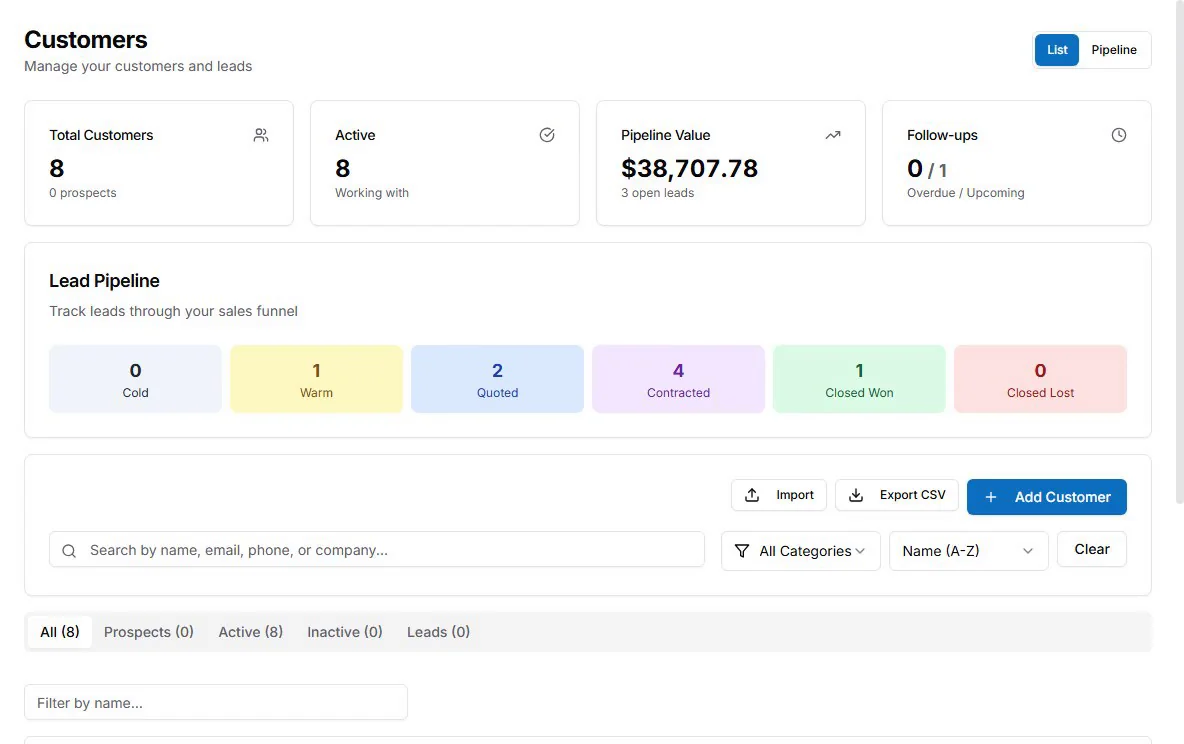
Phone call transcription. A customer calls about flickering lights in a rental. The AI transcribes the call, writes a summary into the customer record, and flags booking details for the office. On platforms that capture after-hours calls, the summary is waiting when the shop opens at 7 a.m. instead of sitting in a voicemail box nobody checks until noon.
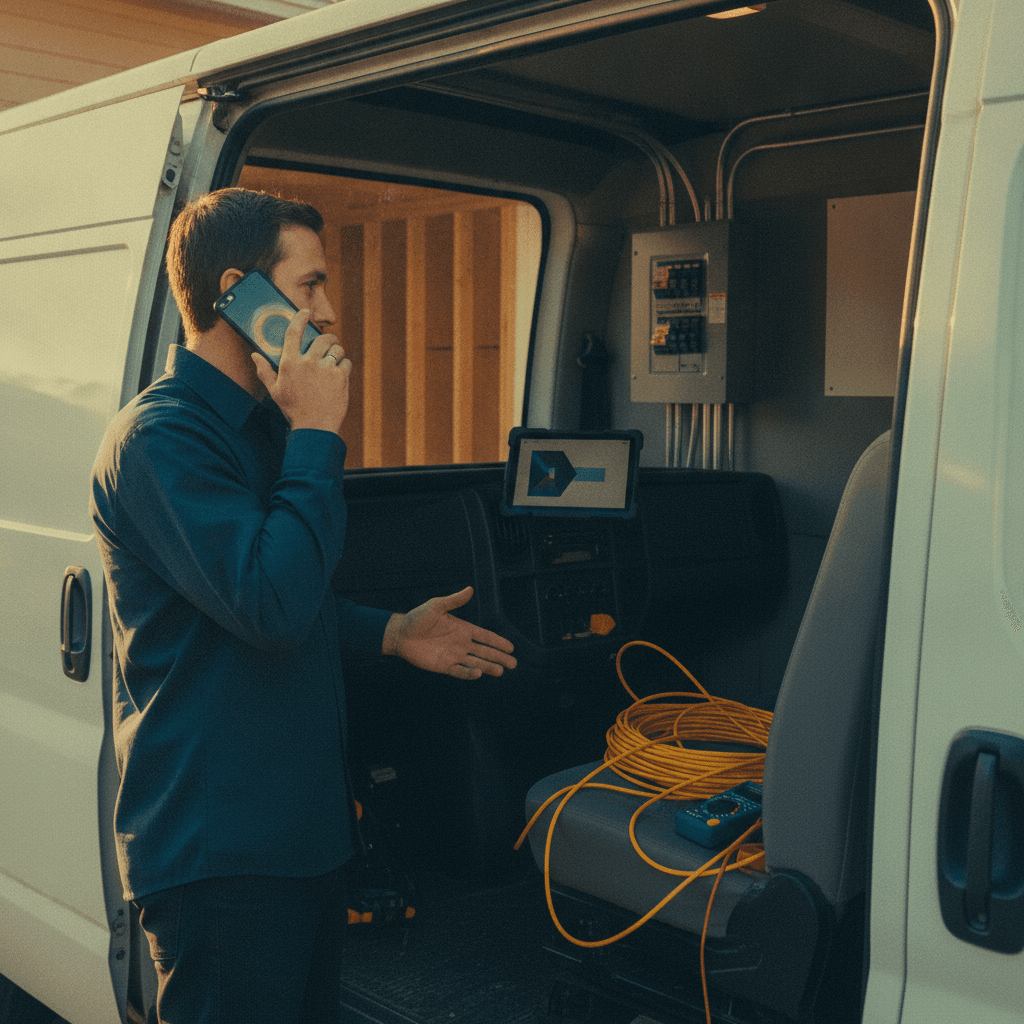
Voice notes from the field. Standing at the truck after a site visit, the electrician records 90 seconds. The AI converts it into a structured note covering service size, panel make and condition, available breaker spaces, grounding observations, access constraints, customer questions, and next steps.
Job walk documentation. This is where electrical job walk documentation software earns its subscription: photos, tagged fields, and dictation combine into one record attached to the right job and the right estimate.
For electricians, AI voice documentation is the highest-value path. Most electricians will not type a site summary from a truck cab at 6:40 p.m. after the third call of the day, but nearly everyone will record a 90-second voice memo before pulling out of the driveway.
Accuracy matters more in electrical work than in most trades. A transcription that renders "200-amp service with a 100-amp subpanel" as "200-amp panel" changes the estimate, the material list, and possibly the permit. Tools tuned to trade vocabulary, including amperage, AWG sizes, EMT, Zinsco, and Stab-Lok, make fewer of those errors.
AceWatt: AI CRM Notes Built for Electrical Contractors
AceWatt is an AI CRM for electrical contractors built around the field workflow above rather than adapted to it. The core note loop runs in five steps.
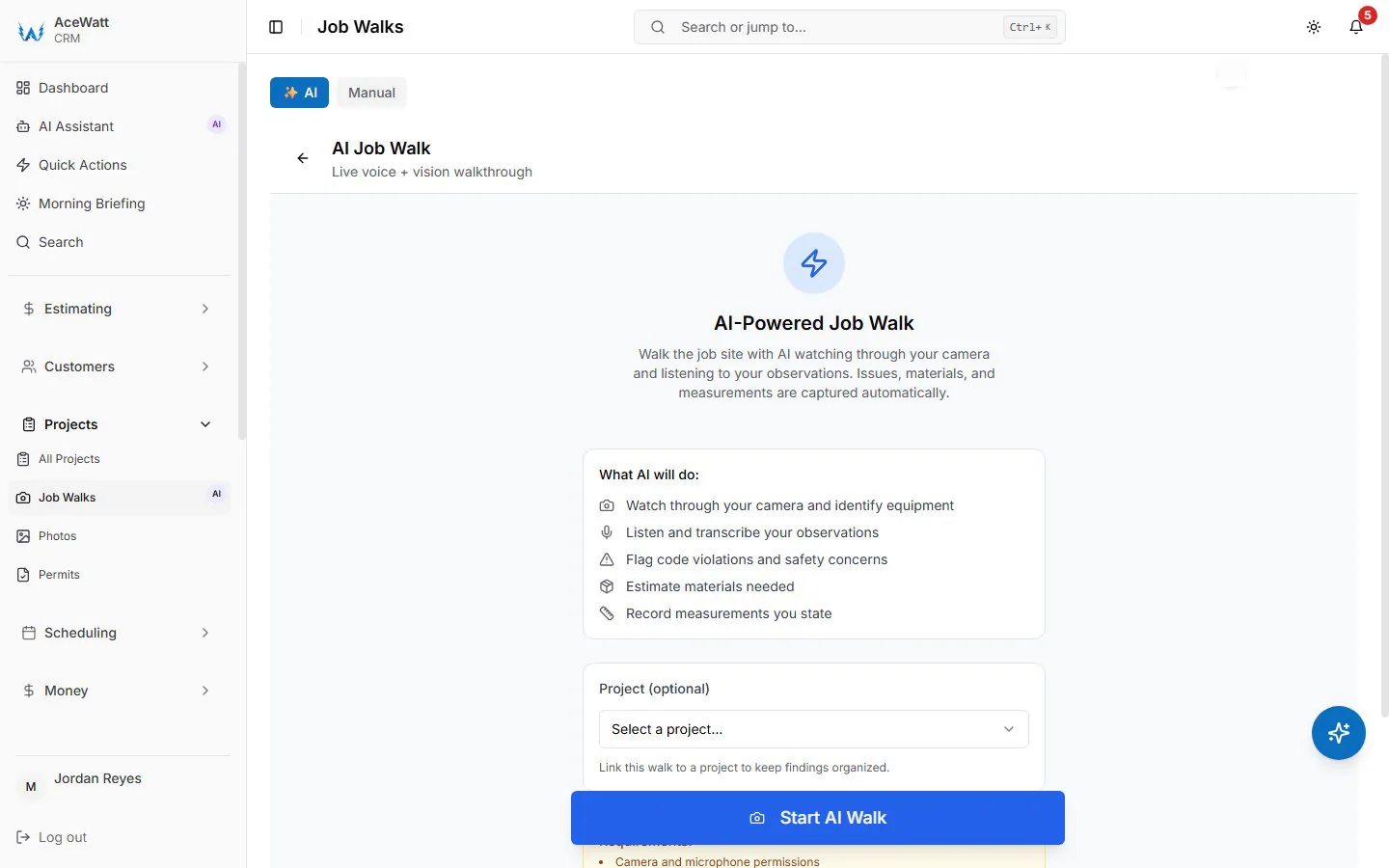
- Record a 90-second voice note from the truck after the job walk. AI Voice and Job Walk Documentation transcribes it and writes the structured note: service size, panel make and model, condition, available spaces, conduit and access observations, and the customer's stated priorities.
- AI Estimating reads the walk data and drafts the estimate, including material lines, labor hours, and permit items. The estimator edits instead of re-entering.
- The customer can e-sign the quote, and AceWatt then emails the invoice automatically (a deposit invoice first, if the quote asks for one).
- Crew Scheduling and Dispatching carries the walk notes to the assigned tech, including staging details like the attic access issue above.
- Job Tracking, Invoicing, and Payment Tracking close the loop from the same note trail, and QuickBooks-ready exports give your bookkeeper the invoice list and payroll hours.
For a solo electrician, the payoff is capturing the walk before driving away. For a growing shop, the office sees every walk the same afternoon. Because the note feeds the estimate and the invoice from a single capture, AI estimating software for electrical contractors only works as well as the notes underneath it. AceWatt treats the note as the start of the workflow.
Jobber: AI Summaries for Small Electrical Teams
Among field service CRMs for electricians, Jobber is the most common entry point. Its strengths are quoting, scheduling, and invoicing in one app, plus an AI assistant that drafts customer messages, sends job reminders, and automates review requests.
Note capture happens through technician checklists and job forms in the mobile app, with call notes typed by whoever books the job. Entry plans sit under $100 per month for a single user, and pricing changes often, so verify current rates.
Best fit: residential shops doing short-cycle work where the note reads "replaced GFCI in garage, tested OK." The limitation: forms are generic. Panel condition is a text box rather than a structured field, and notes carry no electrical context into the quote. The AI helps office communication more than field documentation.
Housecall Pro: Call Transcription and Note Automation
Housecall Pro targets residential home-service businesses and leans on customer communication automation. Incoming calls log to the customer record, missed calls trigger automated text-backs, and call transcriptions and summaries attach to the record. Technician notes live in the job app, with on-my-way texts and post-job review requests running automatically. The Basic plan starts around $79 per month with annual billing, and higher tiers add marketing and reporting.
Best fit: shops where the phone is the bottleneck. As customer communication software for electrical contractors, it covers missed-call recovery and review generation well. The limitation: job walk documentation is limited to freeform notes and photos, with no estimating intelligence, so panel upgrade walks still get reconstructed manually at the desk.
ServiceTitan: Dispatch-Driven CRM Updates for Larger Electrical Companies
ServiceTitan is the enterprise option, used by large electrical, plumbing, and HVAC contractors. It functions as electrical dispatch software with CRM at the center. CSRs book calls into structured call types, the dispatch board updates job status as techs progress, the technician app collects forms and notes, calls are recorded, and reporting ties note quality to revenue per job. Current AI features focus on call summaries and booking assistance for office staff.
Pricing is quote-based, with per-technician subscription fees and a paid implementation period. The economics work for shops past several million in annual revenue with dedicated office staff. For a two or three truck shop, the setup weight and cost outweigh the benefit. Fit: multi-crew electrical contractors running a call center operation.
JobNimbus: Note Sync for Electrical Project Management
JobNimbus is a project management CRM built on boards and pipelines, popular in exterior trades and adopted by electrical contractors running commercial work. Every email and integrated phone call syncs to the contact record, automations move jobs across pipeline stages as tasks complete, and templates handle proposals, change orders, and scheduled follow-ups. Per-user pricing runs roughly $95 to $165 per month depending on tier and billing terms.
Best fit: shops managing tenant improvement builds and multi-phase commercial projects, where the note trail is mostly emails and calls rather than field dictation. The limitation: voice documentation from the field is minimal, so electricians still need a separate capture habit, and that is where details leak.
How to Choose the Right AI CRM Note Tool for Your Electrical Business
Judge electrical contractor CRM software on five criteria, in this order.
- Electrical workflow fit. Structured fields for service size, panel condition, load calculation inputs, and permit items beat generic text boxes. A tool that cannot distinguish a service upgrade from a subpanel install will not protect your estimate margins.
- Field usability. One-handed capture from the driver's seat decides whether notes exist at all. If the app requires typing, tagging, and form navigation in a truck cab, walk notes will not survive a 10-hour day. Voice capture with automatic structuring sets the bar.
- Dispatch integration. Notes written at 4 p.m. should reach tomorrow's assigned tech without an office relay. When documentation and dispatch share one system, staging details like attic access, breaker lockouts, and parking constraints travel with the job instead of dying in a folder.
- Downstream flow into revenue. The test of the best CRM for electricians in 2026 is whether a note becomes an estimate line, a follow-up sequence, an invoice, and a QuickBooks entry without anyone re-typing it. Standalone note apps stop at the transcript, while a connected platform carries the same 90 seconds of dictation into the estimate, the dispatch board, and the books.
- Cost per captured job. Measure cost against the value of a single recovered job rather than the subscription fee alone. One recovered $4,200 panel upgrade covers months of mid-tier software, and a dispatcher who stops re-keying walk notes into three separate systems saves real payroll every week.
Stop Losing Job Details: Automate CRM Notes Without Adding Admin Work
Every shop already runs a note system. The difference is whether it runs on phones, memory, and Sunday-night data entry, or on capture that starts at the truck and ends in the invoice. The five platforms above sit at different points on that line, and the right choice tracks shop size and job type.
For a solo electrician, test voice-to-note capture on the next three panel walks and measure two things: minutes spent documenting, and whether the EV charger comment, the wall access details, and the panel serial number made it into the record. For a two to five truck shop, time the gap between job walk and estimate. If it exceeds 24 hours, follow-up is already losing jobs to faster competitors, and automated follow up for electrical contractors becomes the second feature to demand after voice capture. For a commercial shop, audit whether project notes survive the handoffs between estimator, project manager, and foreman, because that handoff is where commercial scope details usually vanish.
Start with one job type. Run the new capture path on every panel or service upgrade walk for two weeks, then pull three records and check them against what the truck actually saw: amperage, panel make, access constraints, and the customer's stated priorities. If the details held, keep the tool and extend it to service calls and estimate follow-up. If they did not, replace the tool before rolling it out, because a note system that drops trade details in a two-week pilot will drop them at scale.
Related Reading
- Browse the full AceWatt feature set: AI job walk, estimating, invoicing, scheduling.
- AI tools for electricians: the full category map, from estimating to documentation.
- AI agent for electricians: what an always-on agent can actually cover across calls, walks, and follow-up.
- AI job walk documentation: how AceWatt turns a spoken site walk into structured job notes.