
Ways Electric vs. AceWatt: Which Electrical Contractor Software Fits Your Shop in 2026?
Comparing Ways Electric vs. AceWatt usually comes down to one practical question: which platform handles the work your shop actually bills for? Both sit in the electrical field service management software category, and both cover the fundamentals: scheduling, customer records, and invoicing. The differences show up in the workflows that eat your evenings: pricing a 200 amp service upgrade the same day the customer calls, documenting a commercial job walk without stopping to type, and collecting on invoices that slid past net 30.
This guide compares the two across estimating, dispatching, job tracking, invoicing, accounting sync, and AI capabilities, with the trade specifics that should actually drive the decision. Feature sets change, so confirm current capabilities and pricing with each vendor before you sign anything.
Why Electrical Contractors Are Comparing Field Service Software in 2026
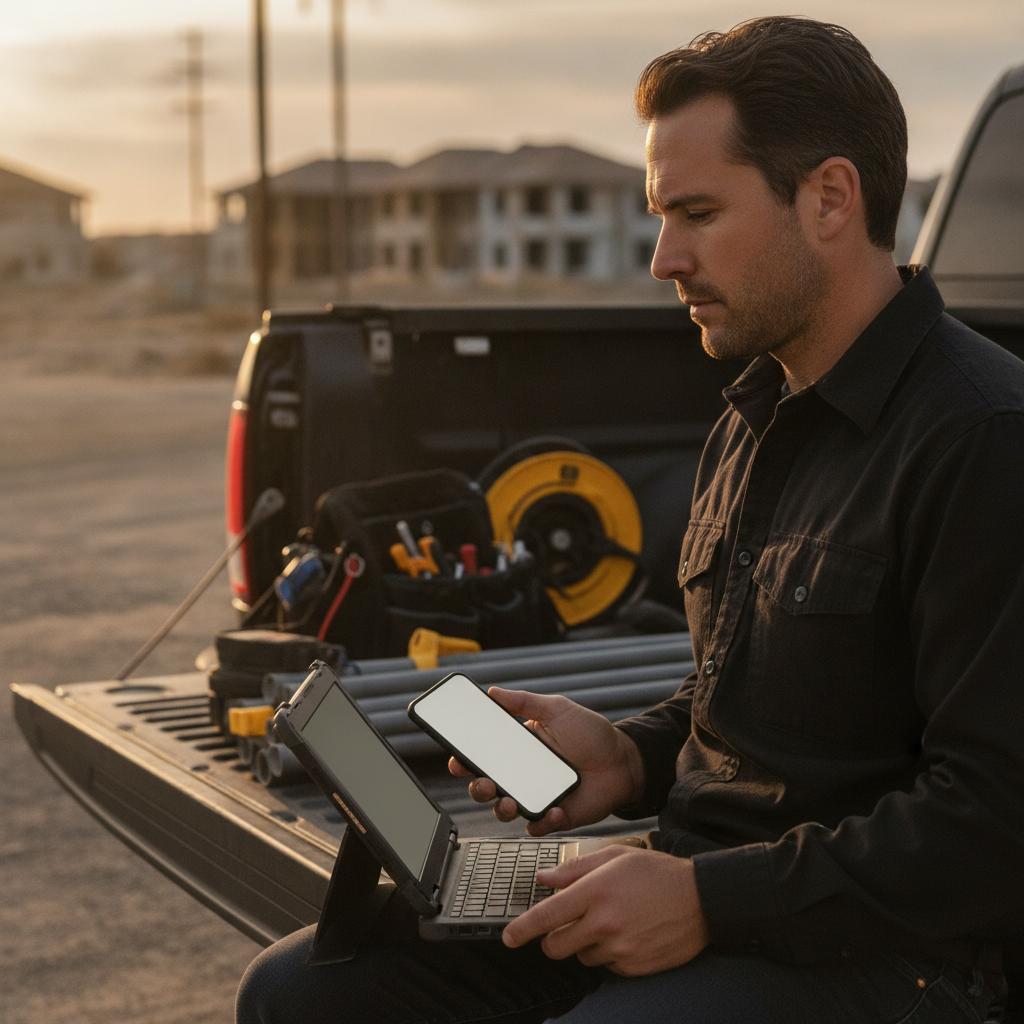
Three pressures are pushing electrical shops to re-evaluate their software this year.
Electrification demand. EV charger installs under NEC Article 625, heat pump circuits, battery storage, and panel upgrades now make up a growing share of residential work. Many of those jobs start with a load calculation, often per NEC 220.83 for existing dwellings, which means the estimate depends on accurate inputs captured on the first visit.
Material volatility. Copper conductor pricing has swung hard enough over the past two years to erase the margin on a flat priced job quoted from a two year old price book. THHN, 4/0 aluminum service cable, and load centers have all moved enough that estimating from stale numbers is a direct hit to gross profit.
The admin squeeze. Licensed electricians are scarce in most US markets, so most shops cannot simply hire an office manager. When the owner is doing load calcs, dispatching, and invoicing after a 10 hour day on the tools, the software has to carry that load. That is the real reason comparisons like this one are getting searched: shops want fewer evenings spent on paperwork, not more features to learn.
Core Feature Comparison: Estimating, Scheduling, Invoicing, and Job Tracking

Ways Electric is an electrical contractor software platform built around the core loop: schedule the job, track it, invoice it. Its estimating is template driven, where you select assemblies from a price book and adjust quantities manually. AceWatt covers that same foundation, then adds an AI layer on top of estimating, documentation, and follow-up.
| Capability | Ways Electric | AceWatt |
|---|---|---|
| Estimating | Template and price book based, manual quantity takeoff | AI Estimating generates itemized estimates from job walk notes and photos |
| Job tracking | Status fields through the job lifecycle | Phase level tracking (rough-in, trim, inspection), change orders, photos |
| Scheduling and dispatch | Calendar and dispatch board | Dispatch board plus AI-assisted booking and customer notifications |
| Invoicing | Invoice templates, email delivery | Invoice generated from job data, deposits, progress billing, card on file |
| Payments | Manual reconciliation typical | Payment tracking with automated reminders on aging invoices |
| Field documentation | Typed notes and photo upload | AI Voice documentation converts spoken job walk notes into structured records |
| Accounting | QuickBooks sync available | QuickBooks sync across estimate-to-invoice-to-payment lifecycle |
| Follow-up | Largely manual | Automated sequences for unsent estimates, unpaid invoices, rebooking |
Where this matters in practice: take a 200 amp service upgrade. A template estimate gives you the basics if the price book is current. What it routinely misses is the line-item detail that determines whether you profit: the grounding electrode conductor and bonding work per NEC 250.66 and 250.104, the AFCI breakers now required in many jurisdictions when a load center is replaced under NEC 210.12, the wall patching and relabeling of the circuit directory per NEC 408.4, and the permit fee, which commonly runs from about $100 to $500 depending on the jurisdiction. An estimate that omits those items either loses money or forces an awkward conversation mid-job.
Job tracking shows a similar split. Both platforms can mark a job complete. For a residential rough-in and trim workflow, you need visibility into whether the rough-in inspection is scheduled and passed, whether trim materials are on the truck, and whether the change order the customer verbally approved (adding four recessed cans after rough-in) has a documented price and a signature. Undocumented change orders are one of the largest profit leaks in residential electrical work, and tracking them inside the job record, rather than in a text thread, is what turns a change order into revenue instead of a dispute.
AI-Powered Capabilities: AceWatt's AI Estimating, Automated Follow-Up, and Voice Documentation

This is where the Ways Electric vs. AceWatt comparison stops being close, because Ways Electric does not build its product around AI workflows and AceWatt does.
AI Estimating. After a job walk, AceWatt's AI Estimating turns your captured notes and photos into an itemized estimate with materials and labor hours. For an EV charger install, that means the walk data (panel capacity, available spaces, run distance to the garage) feeds a takeoff that includes the 6 AWG copper branch circuit a 48 amp wall unit requires on a 60 amp breaker, the permit, and the load calc documentation. Turnaround drops from two days of evening estimating to hours, which matters because residential customers typically collect two to three bids, and the first credible bid in front of the customer frames every other number they see.
AI Voice and Job Walk Documentation. On site, the electrician narrates findings out loud: panel brand, bus rating, main breaker size, evidence of double taps, cloth insulation on branch wiring, the attic run conditions. AceWatt transcribes and structures that narration into the job record with the photos attached. The alternative is typing notes at 8 p.m., which is when details get lost, and lost details become unbilled work or callback disputes. For commercial job walks, the documentation also protects you on scope: if the walk record shows a congested ceiling plenum, your bid for conduit runs is defensible.
Automated Follow-Up. Follow-up is where revenue quietly dies: the estimate you emailed and never called about, the invoice that passed net 30, the customer whose service call you completed two years ago who would book a panel inspection today if someone asked. AceWatt automates these sequences: a reminder when an estimate has not been opened or accepted after a set number of days, payment nudges on aging invoices, and rebooking prompts tied to real maintenance triggers such as the 10 year replacement cycle for smoke alarms referenced in NFPA 72. Ways Electric leaves most of this to your memory and your phone's call log.
Back-Office Integration: QuickBooks Sync, Payment Tracking, and Invoicing Workflows
Both platforms connect to QuickBooks Online, so the base question of "will my bookkeeper hate this" is answerable for either. The difference is depth.
AceWatt syncs the full lifecycle: estimate, deposit, progress invoices, final invoice, and payment, with invoice items mapping to your QuickBooks products and services list. Job costing becomes usable because every transaction carries the job reference, so at month end you can see actual margin on the panel upgrade crew versus the service truck instead of guessing from a lump P&L. Deposits on large residential jobs post correctly as liabilities until the work is billed, which keeps your accountant from untangling them in January.
Payment tracking is the other practical gap. Electrical shops carry meaningful receivables, especially on commercial T&M work billed at net 30 or net 45. AceWatt shows invoice aging inside the app and triggers the automated reminders described above, and card on file support lets service customers settle the invoice before the tech leaves the driveway. The same-day invoice matters for cash flow: an invoice sent while the job is fresh gets paid faster than one assembled Friday night, and for a solo electrician, the field-to-invoice step taking 90 seconds instead of 40 minutes is the difference between invoicing daily and invoicing when you get around to it.
Crew Scheduling and Dispatching for Solo Electricians and Growing Electrical Teams
For a solo electrician, scheduling software is mostly about protecting billable hours. AceWatt's booking flow fills open slots without phone tag, clusters calls geographically so you are not crossing the metro three times a day, and keeps a triage view so a dead-panel emergency can displace a ceiling fan install without a chain of rescheduling calls.
For a shop at two to six techs, dispatching becomes a skills problem. A service replacement needs a journeyman comfortable swapping a meter main; an EV charger install needs someone who can run the 220.83 load calc and document it for the permit. AceWatt's dispatch board carries tech skills and status (en route, on site, wrapped), and customer notifications with ETA cut down the "where is my electrician" calls that interrupt the crew every hour. For a 200 amp upgrade that needs two techs and an inspection window, capacity planning on the calendar prevents the double booking that burns a whole morning.
Commercial shops get the most from job phase tracking combined with dispatch: a retail chain's monthly maintenance visit, a multi-floor tenant improvement with rough-in and trim phases across units, and change orders that need approval before the wall closes up.
Pricing, Onboarding, and Scalability for US Electrical Contracting Businesses
Field service software for the trades generally prices per user or per technician, monthly, with annual discounts. Entry tiers across the category commonly run roughly $40 to $70 per user per month, and fuller platforms run $100 and up once you add AI features and accounting sync. Some vendors charge setup or data migration fees; some do not. Ask both companies directly for current numbers, and ask specifically what is excluded at the entry tier, because automated follow-up and voice documentation are exactly the kinds of features that get gated behind higher plans elsewhere.
Onboarding is where implementations succeed or stall. A realistic ramp for either platform: import your customer list and price book, connect QuickBooks, train the crew on capturing job walk data, then run two weeks in parallel with your old process before you cut over. AceWatt's onboarding leans on the AI features early because they produce visible time savings in week one: the first voice-documented job walk and AI-generated estimate usually sells the tool to the skeptics on the crew.
On scalability, check three things before committing: user roles (office manager, dispatcher, tech permissions), whether the entry plan caps the automations you actually want, and how easily you can export your data. Multi-crew growth, a second service truck, or a dedicated estimator should not force a platform change.
Which Platform Is Better for Your Electrical Business in 2026?
The Ways Electric vs. AceWatt decision resolves cleanly once you look at where your shop loses time and money.
Ways Electric is a reasonable fit if your estimating is already standardized in templates you trust, your receivables are tight, and you mainly want a clean app for electrician scheduling and invoicing with familiar, manual workflows.
AceWatt is the stronger fit if any of these describe your shop: estimates take more than a day to turn around and you are losing bids to faster competitors, your job walk notes are thin and disputes or unbilled work follow, invoices age past net 30 without a collection motion, or your QuickBooks file needs a cleanup because of double entry. That profile fits most solo electricians and most growing residential and light commercial shops, which is exactly who AceWatt builds for.
How to Choose the Right Electrical Contractor Software for Your Next Growth Phase
Run both platforms through the same test with your own work. Book demos in the same week and bring identical inputs: the photos and notes from your last 200 amp panel upgrade.
- Time the estimate. Give each platform your job walk data and see what comes back. Check for the AFCI breakers, bonding, permit line, and wall repair. The estimate that misses those items costs you money in the field.
- Test voice documentation live. Narrate a walk the way you would at a real panel and review the structured output for accuracy.
- Follow an invoice to QuickBooks. Watch a deposit, a progress invoice, and a payment post end to end, and confirm job costing with whoever does your books.
- Ask about follow-up automation. Get the specifics on what triggers a reminder and when, for estimates, invoices, and rebooking.
- Check the change order path. Can a tech capture an approved change with a price and a signature before the wall closes?
- Confirm the numbers. Per user pricing, contract terms, setup fees, and what the entry tier excludes.
- Verify data export. You should be able to leave with your customers, jobs, and invoice history.
Whichever platform handles that panel upgrade scenario faster, with fewer missed line items and cleaner paperwork, is the one that will hold up when your shop is busier in 2027 than it is today.