The Power of Specificity: A Complete Guide to Long-Tail SEO and Landing Page Optimization
The Power of Specificity in SEO
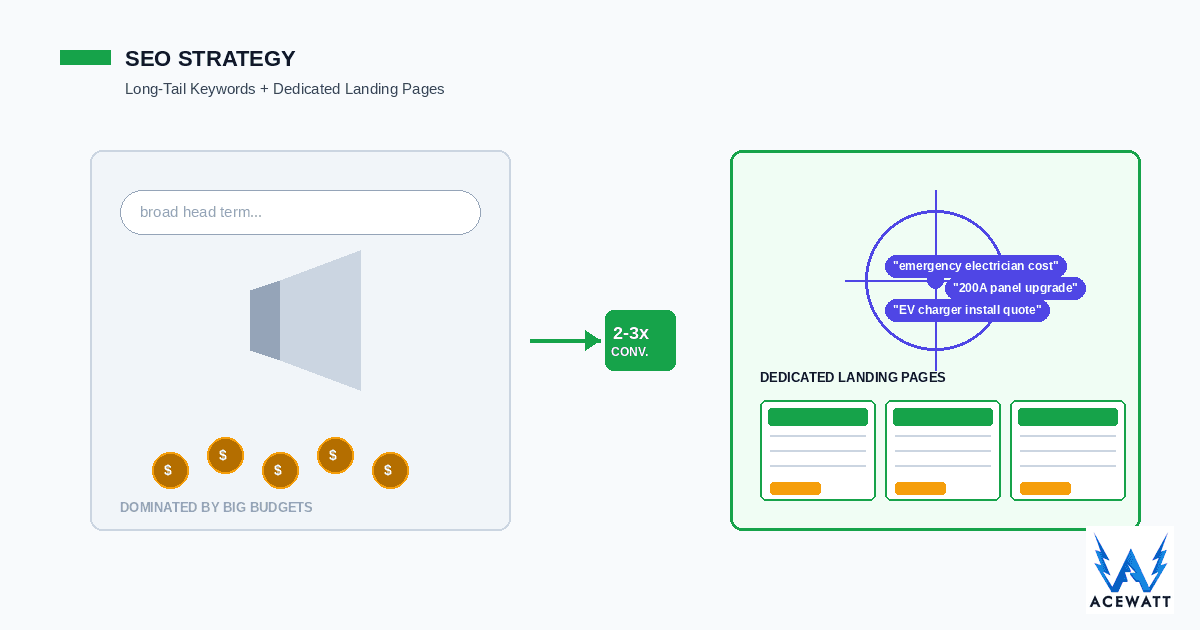
In the modern digital landscape, competing for broad, high-volume search terms is often an exercise in futility. Brands with massive budgets and decades of domain authority dominate the first page for generic keywords, leaving smaller players fighting for table scraps. The true secret to sustainable, highly profitable organic growth isn't casting a wider net, it’s aiming with a sniper’s precision.
This is the power of specificity. By shifting your focus to hyper-targeted queries, you can attract users who know exactly what they want. A targeted long-tail SEO strategy allows you to bypass the noise of broad competition and connect with audiences at the exact moment they are ready to act. In this guide, we’ll explore how to uncover these hidden opportunities and transform them into high-converting SEO keywords by building dedicated, highly focused landing pages.
What Are Niche Long-Tail Keywords?
Long-tail keywords are highly specific search queries that usually contain three or more words. While a "head" term like "running shoes" might generate tens of thousands of daily searches, a long-tail variant like "women's trail running shoes for flat feet size 8" will generate significantly less volume.
However, what these keywords lack in raw search volume, they make up for in commercial value. Long-tail keywords have lower search volume but significantly higher conversion rates due to specific search intent. A user searching for "shoes" is likely in the browsing phase. A user searching for a specific size, color, and use-case is holding their credit card, ready to buy.
Embracing search intent marketing means understanding that specificity equals clarity. When you know exactly what your audience is asking for, you can provide the exact answer, product, or service they need.
Why Dedicated Landing Pages are Essential for Long-Tail SEO
Discovering great keywords is only half the battle. To truly capitalize on this traffic, you need a dedicated page for every distinct query. Here is why dedicated landing page optimization is non-negotiable:
Hyper-Relevant User Experience
When a user clicks on a search result, they expect the page to perfectly match their query. If you send a user searching for "best CRM for freelance photographers" to your generic homepage, they will bounce. Sending them to a dedicated page that speaks directly to freelance photographers instantly validates their search and keeps them on your site.
Keyword Cannibalization Prevention
A common SEO mistake is targeting similar long-tail variations across multiple pages or blog posts. This confuses search engines, forcing them to choose which page to rank, ultimately hurting both. Proper keyword cannibalization prevention dictates creating one authoritative, dedicated landing page per distinct topic cluster.
Passing Link Equity
Search engines reward relevance. By isolating a specific long-tail query on its own URL, you create a concentrated signal to Google about exactly what that page is about, making it significantly easier to rank.
Step-by-Step: Finding the Right Long-Tail Keywords
Effective niche keyword research requires a systematic approach. You aren't just looking for words; you are looking for questions, pain points, and specific scenarios. Here is how to find them:
Step 1: Analyze the "People Also Ask" Section
Start with Google itself. Type in a broad keyword related to your industry and scroll to the "People Also Ask" (PAA) boxes. These dropdown menus provide direct insight into the exact, question-based queries your target audience is typing into the search bar.
Step 2: Use Specialized SEO Tools
Use industry-standard tools to uncover search volume and keyword difficulty:
- Google Keyword Planner: Great for finding variations of your seed keywords and understanding historical search volume trends.
- AnswerThePublic: This tool scrapes the internet for question-based queries (who, what, where, why, how) related to your seed word, making it incredible for uncovering ultra-niche problems.
- Ahrefs or Semrush: Use these platforms to analyze your competitors. Look at the keywords they rank for that you don't. Filter for low-difficulty, highly specific phrases to find quick wins.
Step 3: Lean on Customer Data
Your existing customers are a goldmine for keyword research. Review your customer service tickets, sales call transcripts, and Reddit threads related to your industry. The natural language people use when describing their problems is exactly how they will search for solutions.
Best Practices for Building High-Converting Landing Pages
Once you have your keywords, it’s time to build the pages that will capture and convert that traffic. Adhering to on-page SEO best practices is what bridges the gap between traffic and revenue.
Align Copy and Meta Tags Precisely with Search Intent
Do not write copy for search engines; write it for the human being who just typed in the query. Align the landing page copy, meta titles, meta descriptions, and multimedia precisely with the user's search intent. If the keyword implies a localized search (e.g., "emergency roof repair Chicago"), ensure local SEO signals and reassurance of fast response times dominate the above-the-fold content.
Structure for Skimmability
Users who arrive via long-tail searches are highly qualified but impatient. Use clear H1, H2, and H3 tags that directly reflect the keyword. Break up text with bullet points, bold text for key concepts, and relevant, optimized multimedia (like explainer videos or infographics) to keep them engaged.
Implement Strategic Internal Linking
New, niche landing pages need authority to rank. Internal linking from high-authority pages (like your homepage or top-performing blog posts) is crucial to pass link equity to new, niche landing pages. Link to these new pages using descriptive, exact-match or partial-match anchor text to help search engines understand the context.
Craft a Frictionless CTA
Because long-tail traffic is highly targeted, your landing page conversion rate should naturally outperform your site average. Ensure your Call-to-Action (CTA) perfectly matches the user's intent. If they searched for "how to fix a leaky faucet," the CTA shouldn't be "Buy Tools", it should be "Download the Free DIY Plumbing Guide" or "Book a Plumber."
Measuring Success: Tracking Your Long-Tail Keyword Strategy
SEO is not a set-it-and-forget-it endeavor. To ensure your strategy is working, you must continuously monitor organic traffic, bounce rates, and conversion metrics to refine your keyword targeting.
Track the Right Metrics
Connect your landing pages to Google Analytics and Google Search Console. Look beyond raw traffic numbers. Monitor:
- Organic CTR (Click-Through Rate): Are your meta titles enticing enough for searchers to click?
- Time on Page and Bounce Rate: If users click but leave immediately, your page isn't satisfying their search intent, and your rankings will eventually drop.
- Conversion Rate: Are these highly targeted visitors actually buying, subscribing, or contacting you?
Iterate and Optimize
Evaluate your data monthly. If a dedicated landing page is generating traffic but failing to convert, revisit the search intent. Perhaps the user was looking for information (informational intent) while your page was aggressively pushing a sale (transactional intent). Adjust your copy, tweak your CTA, and test again.
Conclusion: Scaling Your Niche Keyword Strategy
The beauty of a long-tail SEO strategy is that it compounds over time. While ranking for a massive head term might take years, dedicated landing pages built around specific, low-competition queries can often rank in a matter of weeks.
By committing to rigorous niche keyword research, implementing strict keyword cannibalization prevention, and prioritizing user experience above all else, you can build an arsenal of digital assets that work tirelessly for your bottom line. Start small, measure your success, and continually scale your dedicated landing pages to dominate the search results that truly matter.