

Finding the right ServiceTitan alternative for electricians in 2026
Why Electrical Contractors Are Searching for a ServiceTitan Alternative in 2026
Electrical contractors handle complex workflows that generic field service software often fails to support. From coordinating 200-amp panel upgrades and commercial tenant build-outs to navigating strict permit processes and Article 220 load calculations, electricians require highly specialized tools.
In 2026, software bloat and generalized features are driving growing electrical shops to look elsewhere. Many teams find themselves paying premium prices for platforms that heavily favor plumbing and HVAC workflows. Searches for a dedicated servicetitan alternative for electricians have grown quickly as shops look for tools that actually match their daily operations. When your software cannot properly track multi-day wire pulls or manage change orders effectively, it stops being an asset and starts getting in the way.
ServiceTitan Overview: What It Does Well and Where It Falls Short for Electricians
ServiceTitan established itself as a major name in the trades, and its strengths are comprehensive dispatching, marketing integrations, and enterprise-level reporting. For massive, multi-trade organizations, it provides a centralized hub for operations.
However, because it serves multiple trades, its feature set is heavily generalized. Electricians often find themselves navigating HVAC-centric pricing menus, plumbing-focused inventory structures, and workflows that do not account for electrical realities like permit tracking, conduit runs, or phase balancing. Beyond that, ServiceTitan uses proprietary accounting software. For established electrical shops already committed to QuickBooks, this often means undergoing a painful migration process or resorting to duplicate data entry to keep their books accurate. For smaller operations or growing electrical shops under ten technicians, the enterprise-style onboarding and cost-per-technician structure can be prohibitive.
AceWatt Overview: A Purpose-Built Platform for Electrical Contractors
AceWatt was built from the ground up to address the exact friction points electricians face daily. Instead of forcing electrical contractors to adapt to a generic home-services mold, AceWatt is designed specifically around electrical workflows like panel upgrades, load calculations, and permit tracking.
By focusing entirely on electrical contracting, AceWatt eliminates the clutter of irrelevant features. The platform provides an AI-powered CRM, automated follow-up, intelligent estimating, and precise job tracking that fit the way solo electricians and growing electrical shops actually operate in the field. Whether a contractor is bidding a residential service upgrade or managing a commercial new-construction rough-in, the software is built for that work.
Head-to-Head: AI Estimating, Automated Follow-Up, and Crew Dispatching
When comparing core operations, the differences between generalized platforms and electrical-specific software become immediately apparent.
AI Estimating: AceWatt’s AI Estimating drafts quotes for your review from job walks, photos, a typed description or an uploaded PDF plan set, using your company pricebook and assembly templates. Plan symbol counts are not reliable, so you verify receptacle counts and MC runs before the bid goes out; it still cuts typing and estimating time. Generalized software requires third-party integrations or manual entry to achieve the same result.
Automated Follow-Up: Capturing post-service leads, maintenance agreement renewals, and estimate approvals usually requires a dedicated office manager. AceWatt’s Automated Follow-Up covers the collections side: once an invoice is overdue, email reminders go out automatically at 1, 7, 14 and 30 days late, so solo electricians and shops under ten technicians get paid without pulling their field techs off the job. Leads, renewals and pending estimate approvals still need your own follow-up.
Crew Scheduling, Dispatching, and Job Tracking: AceWatt pairs its Crew Scheduling and Dispatching with detailed Job Tracking. Electrical contractors gain real-time visibility into technician status, job progress, and material requirements across multiple active sites. If a crew runs out of 3/4-inch EMT or specific breakers halfway through a job, the dispatch board immediately reflects the delay and allows management to route additional materials or reassign technicians to prevent downtime.
AI Voice and Job Walk Documentation: A Trade-Specific Advantage
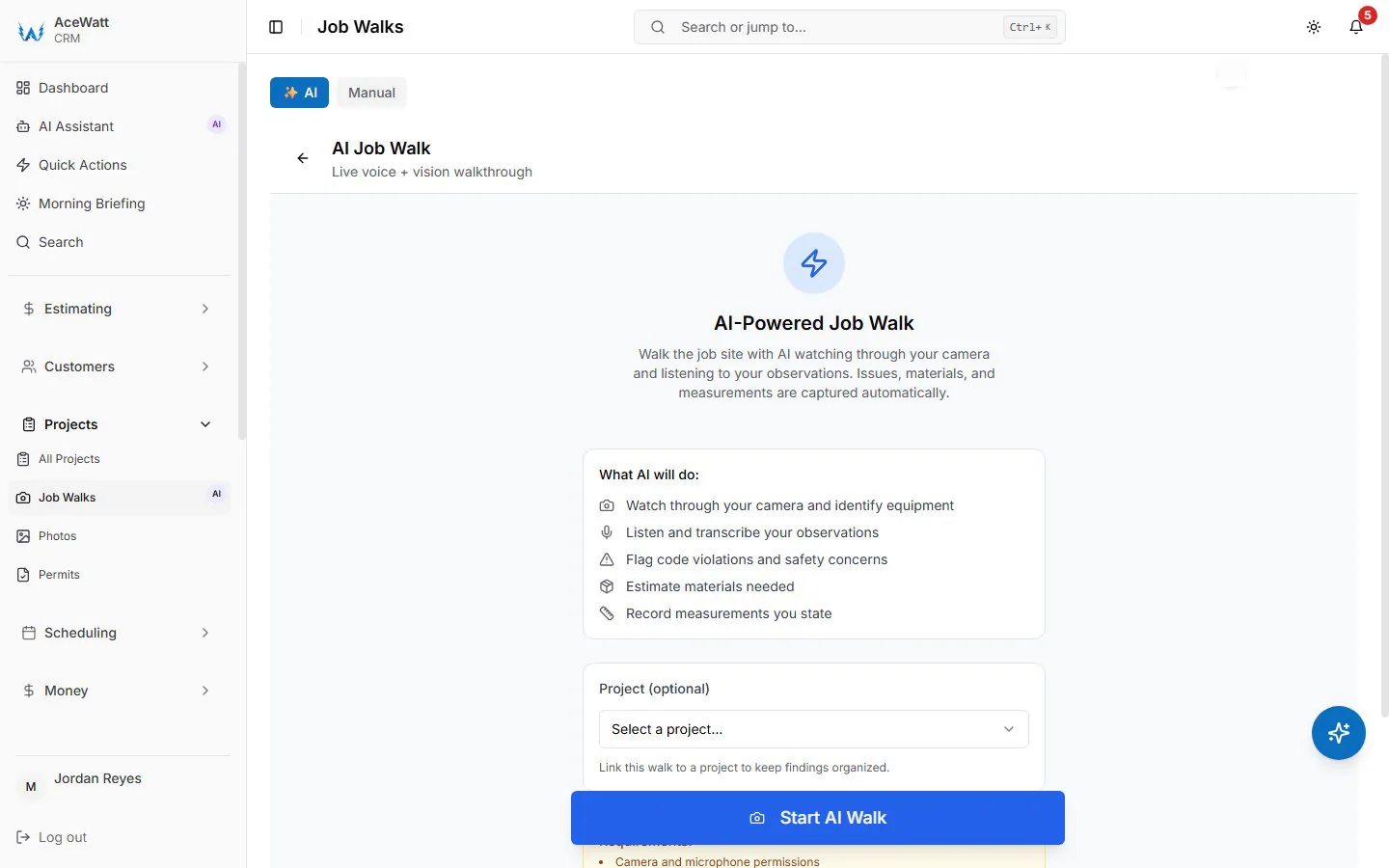
One of the most challenging aspects of electrical project management is accurately documenting site conditions, code references, and unexpected changes. When electricians are wearing PPE, carrying tools, and navigating active construction sites, pulling out a phone to type out notes is inefficient and often leads to lost information.
AceWatt solves this with its AI Voice and Job Walk Documentation feature. Electricians can walk a site hands-free and dictate their findings. The AI captures site conditions, logs specific NEC code references (such as grounding requirements in 250.50 or GFCI protection mandates in 210.8), and produces a job-walk report with a materials list that the office can turn into a change order. This removes the risk of lost notes from paper checklists, illegible handwriting, or disorganized text messages sent to the main office.
QuickBooks Sync, Invoicing, and Payment Tracking Compared
Financial management is a primary pain point for contractors evaluating new software. Moving away from ServiceTitan often stems from its proprietary accounting setup, which can isolate a contractor’s financial data.
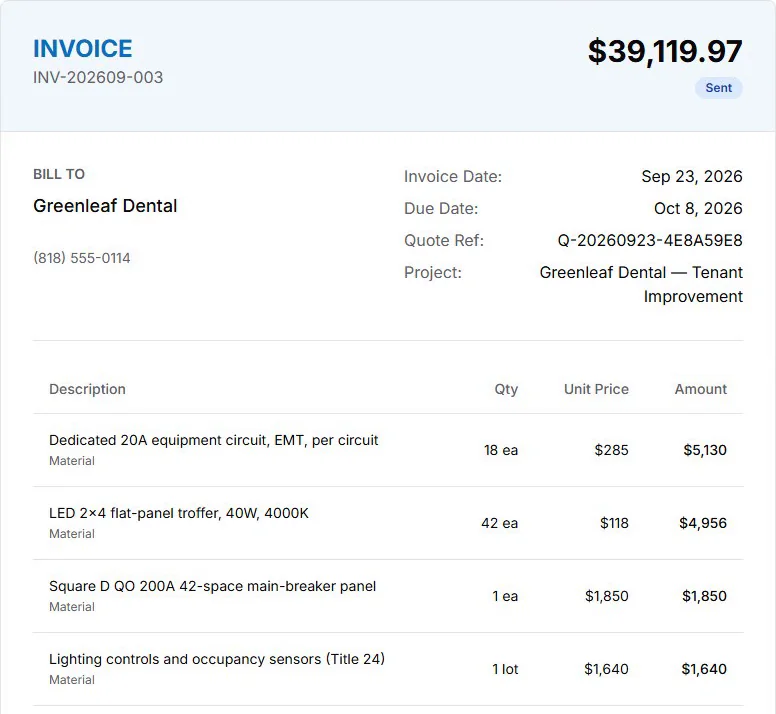
AceWatt’s approach is the transparent one. There is no native, real-time QuickBooks connection today; the handoff is QuickBooks-ready exports, an invoice-list spreadsheet and a QuickBooks-format payroll-hours CSV, owned by your bookkeeper; full sync is in development. When a technician closes out a job in AceWatt (whether it is a commercial lighting retrofit or a residential generator installation), the invoice lands on that export with its payment status and balance, ready for QuickBooks entry. Your bookkeeper works from the finished invoice, with no software migration, no third-party connectors, and no jobs reconstructed from paper tickets.
Pricing, Onboarding, and Scalability for Solo Electricians vs. Growing Shops
Software cost and implementation speed dictate profitability. Enterprise solutions typically require lengthy onboarding periods, dedicated implementation managers, and rigid contracts that favor large-scale operations.
Growing electrical shops evaluating cost-per-technician and onboarding speed will find the implementation models differ sharply. AceWatt prioritizes a contractor-focused implementation strategy, getting solo electricians and small crews up and running in a fraction of the time required for an enterprise-style rollout. This means a solo electrician can adopt the software for estimates and invoicing, while a growing shop with multiple service vans can use the dispatching and job tracking capabilities without hitting sudden, steep pricing walls.
Final Verdict: Which Software Fits Your Electrical Business in 2026?
If you operate a massive, multi-trade organization that handles heavy HVAC and plumbing volume, generalized enterprise software may still serve your broader needs.
However, if you are an electrical contractor, solo electrician, or growing shop looking for the best electrical contractor software in 2026, you need a platform that understands your trade. AceWatt provides a specialized environment that supports AI-drafted estimates from plans and job walks (you verify the counts), hands-free job walk documentation, and QuickBooks-ready exports for your bookkeeper. With purpose-built electrical estimating software with AI, skill-based dispatch suggestions, and real-time job tracking, electrical contractors can eliminate operational bloat, reduce estimating errors, and keep their field crews working efficiently.