

_Last updated: October 2, 2026. Folded the 2026 entrants into the comparison: Quotr.ai (AI takeoff with done-for-you estimate options), Kreo (Auto Measure 3.0 self-checking takeoff), and Beam (construction CRM with AI-built estimates). All three vendor descriptions were checked against their live sites this week. No dollar figures are quoted because vendor pricing changes often. Confirm directly with each vendor._
AI estimating software for electrical contractors speeds up the part of the job that wastes the most time, turning job-walk notes, plans, and field photos into a reviewed, sendable quote. The best AI estimating software for electrical contractors in 2026 is not a single tool. It is whichever tool solves your shop's actual bottleneck: job-walk documentation, takeoff from plans, quote-building speed, or follow-up automation. This guide compares six categories side by side and explains which type of electrical contractor each serves best.
Quick answer: The best AI electrical estimating software depends on the bottleneck you face. For small-to-mid shops that estimate from job walks and field notes, a field-to-quote CRM like AceWatt connects AI quote drafts with follow-up in one workflow. For plan-heavy commercial bids, takeoff-first tools like Countfire handle quantities best. For multi-crew enterprise operations, ServiceTitan or BuildOps provide dispatch and reporting depth. AI estimating software can draft and organize scope, but a licensed electrician, estimator, or qualified reviewer should always approve the final quote.
Electrical estimating is different from generic quoting, and AI estimating software for electrical contractors has to respect that difference. A customer may ask for "a couple of outlets," but the job may involve panel capacity, wall access, permit requirements, existing wiring condition, material availability, and safety considerations. AI estimating software can help organize that information. It should not approve the scope, labor, pricing, code assumptions, or final quote without a licensed electrician, estimator, or qualified reviewer.
For product context, compare AceWatt's automated estimating, AI job walk, and AI quote builder for electrical contractors pages.
If you handle this on the phone in the field, see our guide to estimating software with integrated digital takeoff first; it covers the workflow end to end.
What "AI Estimating" Actually Means for Electrical Contractors
AI estimating is a broad phrase, and the right tool depends on what part of the estimate you want automated. Some tools use AI to summarize job notes. Some help draft scope-of-work language. Some assist with takeoff from drawings. Some suggest line items from templates. Others focus on follow-up after the quote is sent.
Those are useful tasks, but they are not the same as a finished electrical estimate. A final quote still depends on current material prices, labor assumptions, crew availability, permits, inspection requirements, AHJ expectations, site conditions, safety constraints, and business margin. AI estimating software can draft and organize. Contractors still review and decide.
Takeoff Automation
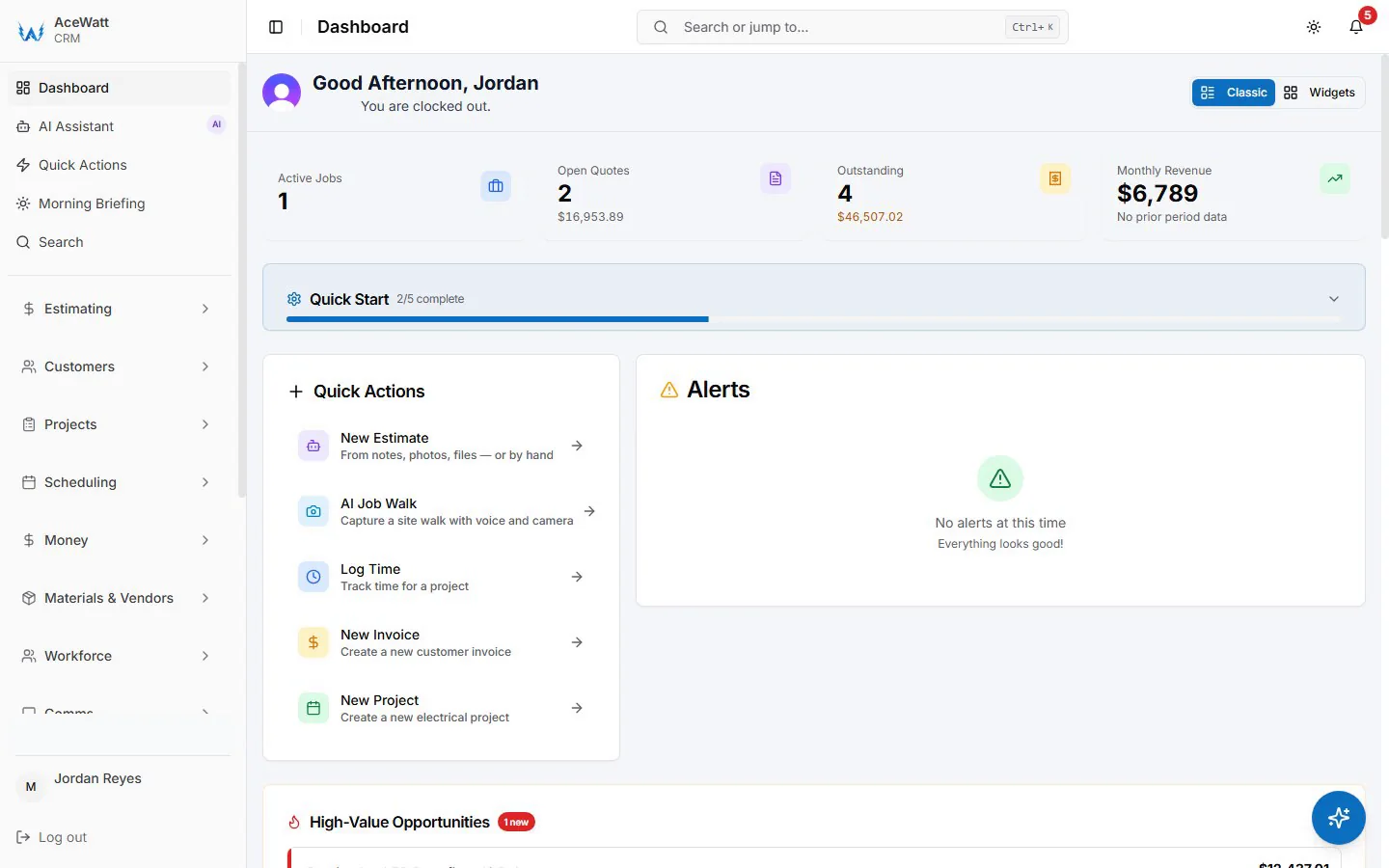
Takeoff automation in AI estimating software for electrical contractors helps estimators measure plans, count fixtures, quantify conduit or cable runs, and organize bid quantities. This is most valuable for commercial plan-and-spec work. If most of your estimates start from drawings, a takeoff-first workflow may matter more than a CRM-first workflow. Our plan-takeoff software comparison covers those tools in depth.
Scope-of-Work Drafting
Scope drafting turns field notes, photos, voice memos, customer requests, and site observations into clear proposal language. This is valuable for service contractors and small project teams. A good draft helps the reviewer see inclusions, exclusions, assumptions, options, and open questions.
Line-Item Suggestions
Some AI estimating software for electrical contractors suggests line items based on templates or prior work. This can speed up repetitive jobs like dedicated circuits, EV charger prep, lighting upgrades, troubleshooting, and panel-related work. The reviewer still needs to verify whether those line items fit the actual site.
Quote Follow-Up and Revision Support
A large part of estimating is not math. It is sending the quote, answering questions, revising options, and following up before the opportunity goes cold. AI-assisted reminders and draft messages can help, but customer promises and contract terms still need human review.
AI Estimating Software Comparison by Use Case
The market for AI estimating software is crowded, and the best AI estimating software for electrical contractors depends on the job mix, so it helps to compare tools by use case instead of chasing a universal ranking. Pricing, features, and AI capabilities change often. Verify current vendor documentation, demos, export options, and plan limits before choosing software.
| Category | Representative Tools | Best For | Key AI Capability | Shop Size Fit |
|---|---|---|---|---|
| Field-to-quote CRM | AceWatt | Electrical shops estimating from job walks and field notes | AI quote drafts for your review from job walks, photos or plan PDFs | Solo to 25 techs |
| Takeoff-first estimating | Countfire, Esticom (acquired by Procore 2020) | Commercial estimators bidding from plans and drawings | AI-assisted symbol counting, measurement automation | Mid to enterprise |
| Home-service CRM | Jobber, Housecall Pro, MyQuoteIQ | General trades needing scheduling + quoting + payments | Template-based quoting, limited AI depth | Solo to 10 techs |
| AI takeoff platforms | Quotr.ai, Kreo | Contractors and developers who want AI-assisted blueprint takeoff without deep estimating staff | AI blueprint takeoff, self-checking measurements, optional done-for-you estimate drafts | Varies |
| Construction CRM with AI estimates | Beam | Builders who want lead tracking and AI-built estimates in one product | AI estimate building tied to sales pipeline | Varies |
| Broad contractor AI | Handoff, ForemanAI | Multi-trade contractors testing AI estimate drafting | Cross-trade scope drafting, scope suggestions | Varies |
| Enterprise field service | ServiceTitan, BuildOps | Multi-crew operations with dispatch, reporting, office staff | Operational automation, limited estimating AI | 20+ techs |
| General-purpose takeoff | PlanSwift, Bluebeam | Any trade doing plan-based quantity takeoff | PDF measurement, markup, counting tools | All sizes |
This is not a claim that one vendor is universally better than another. It is a buying framework. Bring your actual jobs into the demo and test the workflow from field notes to reviewed estimate to follow-up. The National Electrical Contractors Association (NECA) publishes guidance on estimating standards and labor units that contractors should reference alongside any software tool.
Tool Notes for Electrical Contractors
AceWatt: Fit for Estimating Tied to CRM, Job Walks, and Follow-Up
AceWatt is built around the electrical contractor workflow: customer record, job walk, estimate, follow-up, and invoice context. That matters when the estimate starts with a site visit rather than a clean set of drawings. For shops evaluating AI estimating software for electrical contractors, this connected workflow is the core differentiator.
A common example is an EV charger quote. The customer asks for a simple installation, but the electrician needs to document panel condition, routing, distance, available capacity, access, permits, and options. If those details live in scattered photos and memory, the quote becomes after-hours admin work. AceWatt's workflow is designed to keep the job-walk context connected so an AI-assisted quote draft can be reviewed more quickly.
Good fit if you:
- Run a solo, small, or growing electrical shop.
- Estimate from job walks, customer calls, and field notes.
- Want a connected CRM instead of isolated quoting documents.
- Want an accepted quote invoiced and emailed without re-typing.
- Want AI to assist with drafts while a qualified person approves final scope and pricing.
AceWatt is not a replacement for a licensed electrician, accountant, tax advisor, attorney, or code official. It supports draft preparation and workflow organization. Final scope, compliance, safety, pricing, and customer commitments remain contractor responsibilities.
Countfire and Takeoff-First Tools: Best for Plan-Heavy Estimating
Takeoff-first tools can be the right answer when most bids start with drawings. They help quantify work, organize measurements, and support detailed bids. For commercial electrical estimators, that can be essential.
The limitation is that takeoff is only one part of the business workflow. If your pain is customer follow-up, job-walk notes, small project quotes, or invoice handoff, a takeoff tool may not solve the whole problem. Many contractors eventually use different tools for takeoff and CRM.
MyQuoteIQ and Home-Service CRM Tools: Useful to Compare Carefully
Home-service CRM and estimating platforms may offer AI-assisted quoting, customer communication, and business management features. They can be useful for contractors who want one system for calls, quotes, scheduling, and payments.
The key is electrical fit. Test real examples: a panel change, troubleshooting call, generator-related service, lighting upgrade, or EV charger install. Ask how the tool handles photos, assumptions, exclusions, permit notes, options, and review steps.
Quotr.ai, Kreo, and the New AI Takeoff Platforms: Read the Output Path
Two kinds of AI takeoff platforms entered this market recently. Quotr.ai pitches AI blueprint takeoff for contractors and developers, with an option to send details in for done-for-you pro formas and factory-direct material procurement when you need it. Kreo now ships Auto Measure 3.0, which adds a second review pass inside the model to check measurements before you see them, and Kreo covers electrical alongside other trades. Beam takes a different angle: a construction CRM that builds estimates with AI alongside lead tracking, which fits builders more than specialty electrical shops.
The same test applies to all three. Ask what happens between the AI output and your number. Who checks the quantities? Can you see and edit the assumptions? Does the output land in a quote you can actually send, or in another document you have to retype? If your estimates start from job walks rather than clean drawings, takeoff automation is not the bottleneck, and an entry on a vendor's own listicle should not decide your shortlist. Verify workflow fit during a demo.
Handoff, ForemanAI, and Broad Contractor AI Tools: Watch the Workflow
Broad AI estimating tools can help draft scopes and organize information across trades. That can be valuable, but electrical contractors should be cautious with any tool that treats all trades the same. Electrical work has safety, permitting, code, material, and inspection realities that require review. The National Fire Protection Association (NFPA) maintains the NEC electrical code standards that any electrical estimate must respect, and that includes staying current with the NEC 2026 code changes, expanded arc-flash labeling, broader GFCI protection, and reorganized load-calculation articles all change how an estimate should be built and reviewed.
Use broad AI tools for draft support only after you understand how data is stored, how reviewers approve output, and how the estimate moves into your CRM or accounting process.
ServiceTitan and BuildOps: Often a Fit for Larger Operations
Larger field-service platforms may include estimating, dispatch, reporting, customer communication, and operational workflows. They can make sense for multi-crew companies with office staff and implementation resources.
For small shops, the risk is complexity. If the team will not use the system every day, the feature list does not matter. Evaluate onboarding time, cost, data migration, and daily adoption before choosing an enterprise-heavy option.
How to Choose the Best AI Estimating Software
Start with your bottleneck. The fastest way to choose the best AI estimating software for electrical contractors is to name the part of the estimate that wastes the most time. Do not buy takeoff software when your real problem is follow-up. Do not buy a broad CRM when the real problem is plan measurement. Do not buy an AI writing tool when the real problem is reviewed electrical scope.
Do You Need Takeoff Automation or Quote-Building Help?
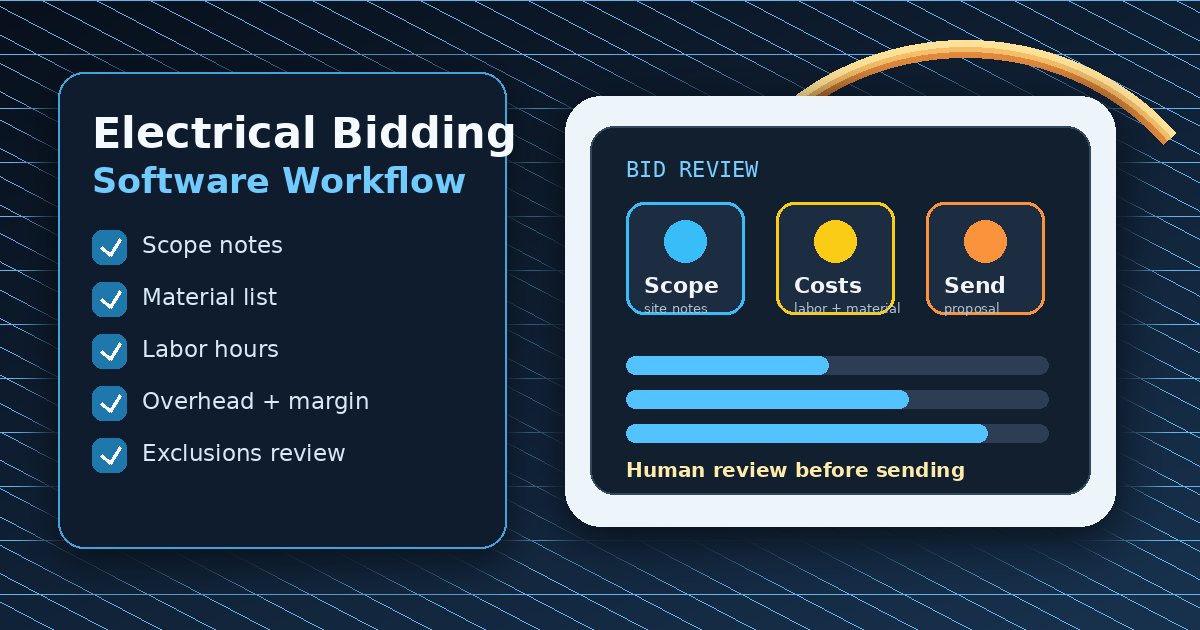
If most jobs start from drawings, compare takeoff and estimating tools first. If most jobs start from site visits, customer calls, and field notes, prioritize job-walk capture and quote drafting. The electrical contractor estimating software guide explains this difference in more detail, and the CRM for commercial electrical bidding guide covers the plan-spec side specifically.
Do Estimates Connect to Customer Follow-Up?
A fast estimate that never gets followed up is still a missed opportunity. Look for a workflow that tracks sent quotes, open questions, revisions, and next steps. AceWatt's AI CRM for contractors page explains how CRM context fits into that workflow.
Can Field Notes Become Scope Notes?
The best AI estimating workflow starts in the field. Photos, voice notes, measurements, customer preferences, and site constraints should become organized scope notes. If the field team has to retype everything later, AI is not solving the real problem.
Does the Tool Support Residential, Commercial, or Both?
Residential service work needs speed, options, and customer communication. Commercial work often needs drawings, assemblies, revisions, and more detailed review. Mixed shops should test both workflows before buying.
Does Your Team Trust AI Output Enough to Review It?
AI adoption fails when the output is either too vague to use or too confident to trust. Good software should make review easier. It should highlight assumptions, let humans edit quickly, and preserve the reasoning behind the quote.
Common Mistakes When Buying AI Estimating Software
The most common mistake when shopping for the best AI estimating software for electrical contractors is buying an AI label instead of a workflow. Contractors should avoid tools that sound impressive in a demo but fail on real jobs.
Watch for these red flags:
- Claims of fully automatic electrical estimates without review.
- Promises of perfect estimate results, profit, close rate, or code compliance.
- Pricing suggestions that ignore local labor, market, permits, and material costs.
- No clear way to capture photos, notes, exclusions, and assumptions.
- No export path if you leave the software.
- No connection between estimate follow-up and customer history.
The right tool should make your estimator or licensed reviewer faster and more organized. It should not hide important decisions.
A Practical 14-Day Evaluation Plan for AI Estimating Software
Use real work during your trial or demo period to evaluate any AI estimating software for electrical contractors before committing. Create three sample jobs: one simple service call, one messy residential project, and one commercial or small-project quote. Capture the notes, build the estimate, review assumptions, send a test quote, revise it, and move it toward scheduling or invoicing.
Evaluate the tool on these outcomes:
- Did it reduce retyping from field notes to estimate?
- Did it make assumptions and exclusions clearer?
- Did it preserve photos, notes, and customer context?
- Did a qualified reviewer find it easy to edit the draft?
- Did follow-up tasks stay visible after the quote was sent?
- Did the workflow feel simple enough for daily use?
If the answer is yes, the tool may be worth deeper evaluation. If the answer is no, the AI feature probably does not match your actual estimating problem.
Where AceWatt Fits
When evaluating the best AI estimating software for electrical contractors, AceWatt is a good shortlist option for shops that want estimating tied to CRM, job-walk documentation, AI-assisted quote drafts, and follow-up. It is especially relevant when quotes are delayed because notes, photos, customer history, and next steps are spread across different places.
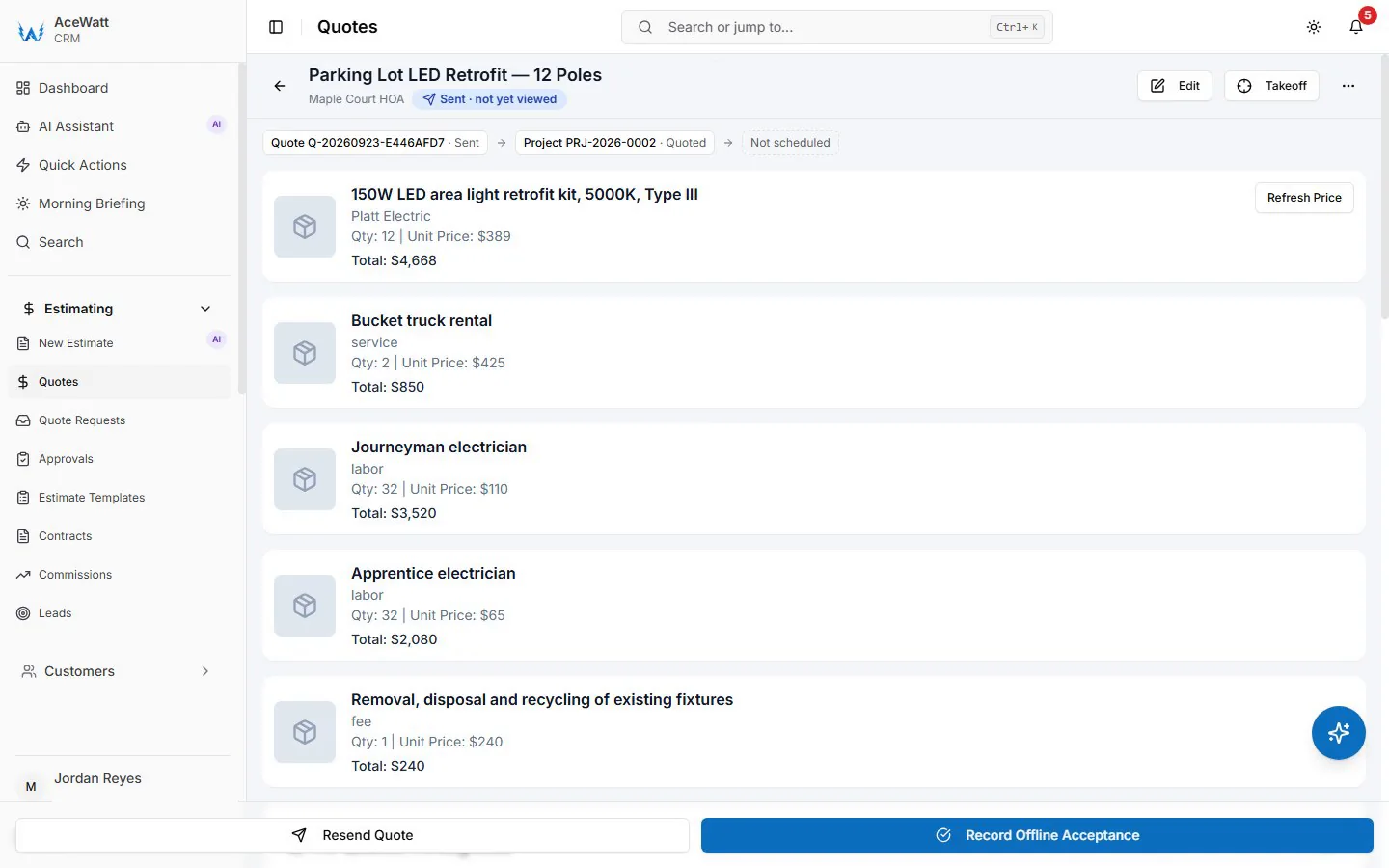
Useful AceWatt resources include the free bid calculator, wire size calculator, voltage drop calculator, estimate template, automated estimating, and electrical estimating software guide. The full set lives on the free electrical contractor tools page.
The safe framing is important: AceWatt assists with drafts and organization. Licensed electricians, qualified estimators, and business owners still verify labor, materials, pricing, scope, permits, code and compliance considerations, safety, and site conditions before a quote is sent.
Frequently Asked Questions
What is the best AI electrical estimating software for electrical contractors?
The best AI estimating software for electrical contractors depends on your workflow. AceWatt fits shops that want job-walk notes, CRM, AI-assisted quote drafts, and follow-up connected. Takeoff-first AI tools fit plan-heavy commercial estimating. Larger field-service platforms fit teams that need broader operations software.
Can AI estimate electrical work accurately?
AI estimating software can help draft and organize an estimate, but accuracy depends on the inputs and human review. Electrical pricing, scope, materials, permits, safety, site conditions, and code considerations should be verified by a licensed electrician or qualified reviewer.
Is AI estimating software the same as takeoff software?
No. Takeoff software focuses on measuring plans and quantities. AI estimating software for electrical contractors may support scope drafting, line-item suggestions, job-walk summaries, quote follow-up, or takeoff. Some AI estimating software overlaps with takeoff, but the workflows are not identical.
What should electricians still review manually?
Electricians should review scope, exclusions, labor assumptions, material pricing, permits, inspection requirements, safety, code and compliance considerations, customer promises, and margin. AI estimating software output should be treated as a draft, not a final decision.
How much does AI estimating software cost?
AI estimating software for electrical contractors varies by vendor, team size, features, onboarding, and plan limits. Verify current pricing directly with each vendor. Evaluate cost against the specific workflow you need: takeoff, CRM, job-walk capture, quote drafting, follow-up, or enterprise operations.
Related Reading
- See all CRM features for electrical contractors in one platform.
- Top Rated Electrical Estimating Software 2026: 9 Best Tools Hands-On Tested
- AI for Electrical Contractors: 7 Ways to Win More Bids
- Best Electrical Estimating Software (2026): Top Tools Compared for Contractors
- Easiest Electrical Estimating Software for Beginners (2026): Ranked by Learning Curve
- how AI estimating helps you stop losing jobs to slow quotes
- cutting job costing errors with better data