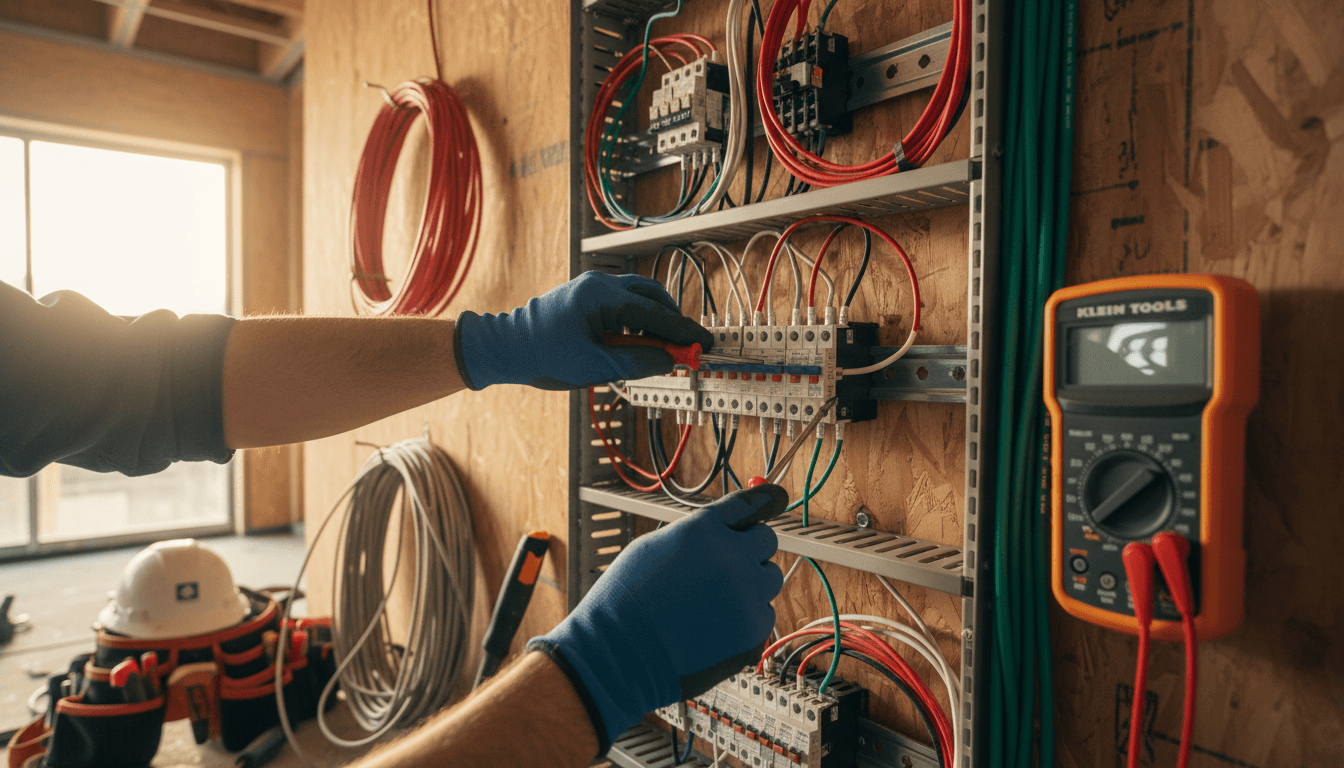
The Ultimate Guide to Accounting Software for Electrical Contractors in 2025
Running a successful electrical business requires more than just technical expertise and excellent customer service. Behind the scenes, maintaining a healthy cash flow, accurately bidding on projects, and managing fluctuating labor costs are what keep the lights on. Generic bookkeeping platforms often fall short when it comes to the complexities of construction and field service.
That is why investing in specialized accounting software for electrical contractors is no longer a luxury, it is a necessity. As your business grows, relying on outdated spreadsheets or basic financial apps will inevitably lead to revenue leakage, payroll headaches, and project cost overruns.
In this comprehensive guide, we will explore the top features you need, review the best platforms available in 2025, and show you how to transition seamlessly to a system that scales with your business.
1. Introduction: Why Electrical Contractors Need Specialized Accounting Software
Electrical contracting comes with a unique set of financial challenges. You are constantly dealing with fluctuating material costs, complex project phases, varying crew labor rates, and strict regulatory compliance requirements. Standard, off-the-shelf accounting platforms simply are not built to handle these nuances.
When you use generic systems, you often have to rely on manual workarounds to track job profitability or reconcile inventory. This not only consumes valuable administrative time but also dramatically increases the risk of human error. Specialized accounting software for electrical contractors solves this problem by combining standard financial management with deep, industry-specific capabilities like project tracking, dispatch integration, and advanced job costing.
By transitioning to a purpose-built platform, you can automate routine data entry, accelerate your invoicing cycles, and gain crystal-clear visibility into the profitability of every job. Ultimately, the right software serves as the financial backbone of your entire operation, enabling you to make data-driven decisions that propel your business forward.
2. Top Features to Look for in Electrical Contractor Accounting Software
Not all platforms are created equal. When evaluating electrical contractor bookkeeping software, you need to look for features that directly address the daily realities of managing an electrical business. Here are the non-negotiable features your next software must have:
Complete Job Costing Software for Electricians
You need to know exactly how much every project costs you in real-time. Superior job costing software for electricians allows you to track expenses against your initial estimate. It should easily break down costs by labor, materials, permits, and subcontractor fees, ensuring you never discover a project has gone over budget after it is already completed.
Automated Payroll and Time-Tracking
Managing multiple crews across various job sites means dealing with varying labor costs, union dues, and overtime rules. Built-in payroll software for electricians should integrate directly with mobile time-tracking apps. This ensures workers are paid accurately for their exact hours on site, while simultaneously pushing those labor costs directly into the project's financial profile.
Mobile Accessibility
Your electricians and project managers are constantly on the move. Mobile accessibility is vital. Field workers need the ability to log hours, upload material receipts, and generate quick estimates straight from their smartphones or tablets. This immediate data sync prevents lost receipts and ensures the back office always has up-to-date financials.
Contractor Invoicing Software
Cash flow is the lifeblood of your business. Effective contractor invoicing software automates the billing process based on project milestones or completed service calls. Look for platforms that allow you to convert approved estimates into invoices with a single click, and offer automated payment reminders to keep your receivables in check.
Scalability
Your software should not just serve your business today; it should grow with you. Whether you are adding a new fleet of service vans or expanding into commercial wiring, the best platforms offer tiered pricing and modular features that scale smoothly alongside an expanding electrical business.
3. The Best Accounting Software for Electrical Contractors in 2025
The market is flooded with options, making it difficult to pinpoint the best contractor software 2025 has to offer. To help you narrow down your choices, here is a balanced mix of general small business platforms and construction-specific tools tailored for electrical professionals:
QuickBooks for Electrical Contractors
QuickBooks Online (Advanced) remains a powerhouse. While it is a general small business tool, using QuickBooks for electrical contractors is highly effective when paired with their native payroll features and third-party field service integrations. It is incredibly user-friendly, widely understood by CPAs, and offers strong job costing capabilities in the higher tiers.
ServiceTitan
For mid-to-large commercial and residential electrical businesses, ServiceTitan accounting features are unmatched. Built specifically for trades, it integrates seamlessly with QuickBooks. It handles everything from dynamic dispatching and pricebook management to comprehensive revenue recognition, drastically reducing administrative overhead.
Contractor Foreman
As a dedicated construction accounting software, Contractor Foreman is an excellent budget-friendly choice. It includes built-in job costing, time tracking, and invoicing, specifically designed for tradesmen. It is a great all-in-one solution for smaller crews looking to consolidate their operational and financial tools.
Foundation
If your electrical business leans heavily toward large-scale commercial contracting, Foundation is a capable desktop and cloud hybrid. It is built specifically for construction, offering deep dive job costing, union payroll processing, and advanced project management integration.
4. Pricing Comparison: Finding the Right Solution for Your Budget
The cost of accounting software for electrical contractors varies wildly based on the number of users, feature sets, and whether the platform is cloud-based or desktop. Understanding the pricing models will help you find a solution that fits your budget without sacrificing essential features.
- Entry-Level / General Platforms ($15 - $80/month): Basic tiers of QuickBooks or FreshBooks are affordable but lack deep construction tools. They are suitable for solo electrician contractors just starting out.
- Mid-Tier Trade Software ($100 - $300/month): Platforms like Contractor Foreman or upgraded QuickBooks packages with added payroll. This tier provides standard job costing software for electricians and complete contractor invoicing software.
- Enterprise Field Service Software ($300 - $500+ per month): Comprehensive platforms like ServiceTitan. These require a higher upfront investment but offer unmatched automation, dispatching, and ServiceTitan accounting features. They drastically minimize human error and accelerate cash flow, easily paying for themselves in time saved.
When budgeting, remember to factor in the cost of onboarding, training, and any necessary third-party integrations.
5. Essential Integrations: Connecting Your Accounting Software with Field Service Tools
Even the most powerful accounting software for electrical contractors cannot operate entirely in a vacuum. To maximize efficiency and reduce administrative overhead, your financial platform must communicate seamlessly with the tools your teams use in the field.
Connecting your accounting system with field service management (FSM) software creates a single source of truth. For example, when a technician completes a job on a dispatch app, the integration should automatically trigger the creation of an invoice in your accounting software. When materials are purchased at a supply house, the receipt should flow directly into your job costing module.
Whether you are using deep third-party API connections with ServiceTitan, or relying on middleware like Zapier to connect your CRM to your bookkeeping platform, these integrations are vital. Cloud accounting for contractors makes these integrations easier than ever, ensuring data flows instantly between the job site and the back office.
6. Pros and Cons of Cloud-Based vs. Desktop Accounting Solutions
When choosing your software, one of the biggest decisions is whether to opt for a cloud-based or desktop platform.
Cloud Accounting for Contractors
Pros:
- Ultimate Accessibility: Access financial data from anywhere, crucial for business owners and project managers constantly moving between job sites.
- Automatic Updates: Features and tax tables are always up to date.
- Seamless Integration: Cloud platforms easily integrate with other modern SaaS tools and field service apps.
Cons:
- Requires a consistent internet connection.
- Monthly subscription fees can add up over time.
Desktop Solutions
Pros:
- Data Control: You physically host your data, which some businesses prefer for security.
- One-Time Pricing: Often requires a larger upfront fee, but no ongoing monthly subscription costs.
Cons:
- Poor mobile accessibility.
- Integrations are often clunky and require manual data syncing.
- Manual backups and updates are required.
In 2025, the industry is overwhelmingly shifting toward cloud accounting for contractors due to the necessity of real-time data and mobile workforce management.
7. How to Successfully Transition to a New Accounting Platform
Implementing new accounting software for electrical contractors can seem daunting, but a structured approach will ensure a smooth transition without disrupting your daily operations.
- Clean Up Your Current Data: Before migrating, clean up your existing chart of accounts, clear out uncollectible invoices, and reconcile your bank statements. Do not bring bad data into a new system.
- Use the Migration Tools: If you are moving to something like QuickBooks, use their built-in migration tools to import lists (customers, vendors, items) rather than historical transactions to keep things clean.
- Train Your Team: The software is only as good as the people using it. Invest time in training your office staff, project managers, and field electricians. Ensure they know how to use the mobile time-tracking and receipt-uploading features.
- Run Parallel Systems: If possible, run your old and new systems side-by-side for one billing cycle. This allows you to catch discrepancies and ensure your job costing and payroll figures are accurate before fully cutting the cord.
8. Conclusion: Choosing the Right Software for Your Electrical Business
Selecting the right accounting software for electrical contractors is an investment in the long-term health and scalability of your business. By automating payroll, simplifying project tracking, and integrating with field service tools, the right software dramatically reduces administrative overhead and minimizes human error.
Whether you opt for the customizable familiarity of QuickBooks, the trade-specific power of ServiceTitan, or an all-in-one solution like Contractor Foreman, prioritize features like detailed job costing, mobile accessibility, and automated invoicing. By making a strategic choice today, you will accelerate your cash flow, enable your crews, and illuminate a clear path to sustained profitability for years to come.